
Garlic Scapes: What They Are, When to Cut, How to Cook
Garlic scapes are only available for a short time in late spring and early summer. Learn when to harvest your own, and enjoy these 3 delicious recipes!
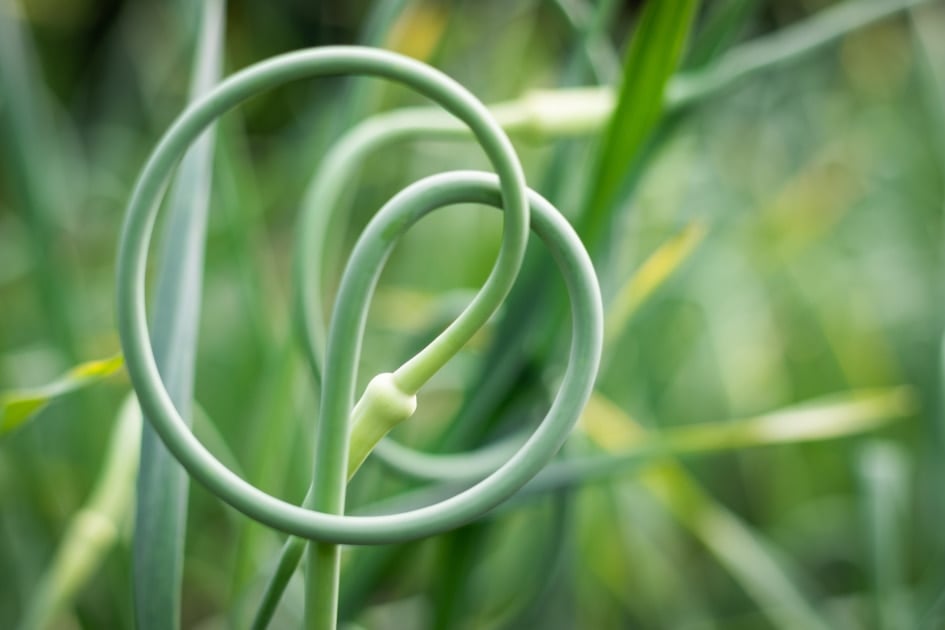
Quick Reference: Garlic Scapes at a Glance
- What they are: the curly green flower stalks of hardneck garlic, cut off in late spring so the plant puts its energy into the bulb.
- Taste: milder than a clove of garlic, somewhere between scallion, chive, and shallot.
- Season: a short window from late spring through early summer (roughly mid-May through late June in most U.S. growing zones).
- How to use them: sauteed, blended into pesto, scattered on pizza, grilled, or pickled.
- Where to find them: farmers’ markets, CSA shares, small grocers, or your own garlic patch.
- Storage: up to 3 weeks in the fridge in a sealed bag, or chopped and frozen for cooking later in the year.
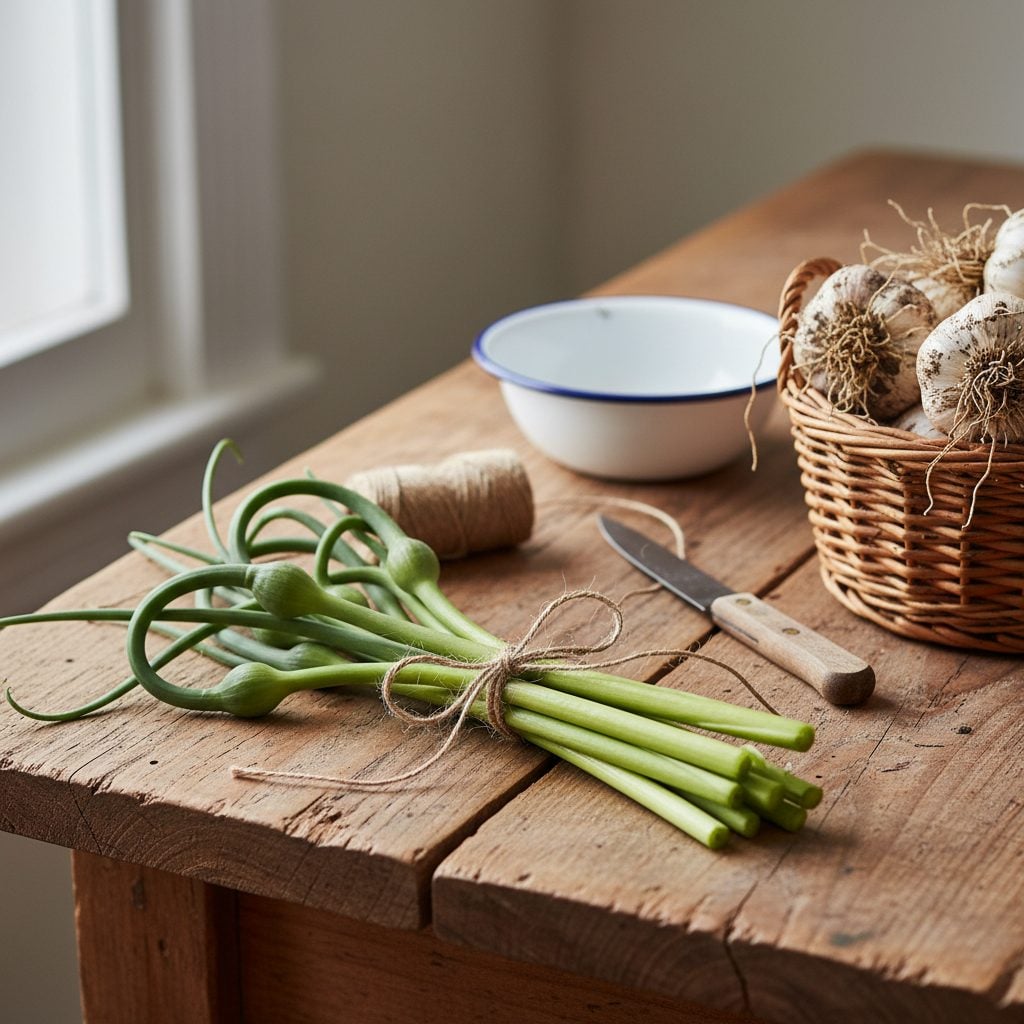
Used to add flavor to a wide variety of dishes, garlic is one of the most popular flavors on the culinary scene. But did you know that the bulbous garlic root is not the only edible part of the plant? The green shoots, or stems, that grow up from those roots, more properly known as garlic scapes, are also edible, and are a staple on the tables of backyard gardeners and farmers’ market shoppers. For background on the parent plant, see Encyclopaedia Britannica’s overview of garlic (Allium sativum).
What Are Garlic Scapes?
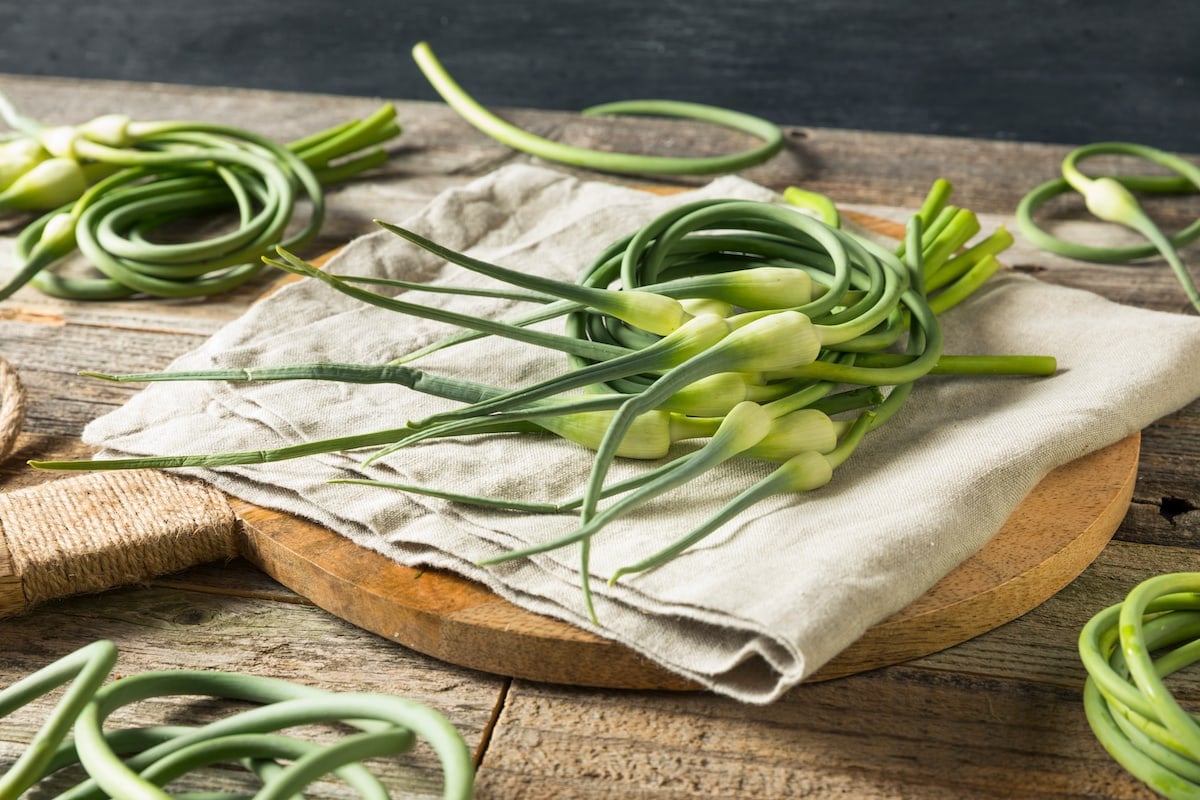
Sprouting out of the ground in late spring, garlic scapes are thin, curly, green stems, resembling grass or wild onions. They appear only on hardneck garlic varieties (most common in cool-winter regions of the U.S. and Canada); softneck garlic does not normally throw a true scape. Growers cut them off to allow more of the plant’s resources to stay focused within the bulb. Young scapes are tender and delicious. They generally have a milder taste than the cloves, similar to shallots or chives. They can be diced up finely and added to various dishes for extra flavor, or sauteed in olive oil and enjoyed on their own.
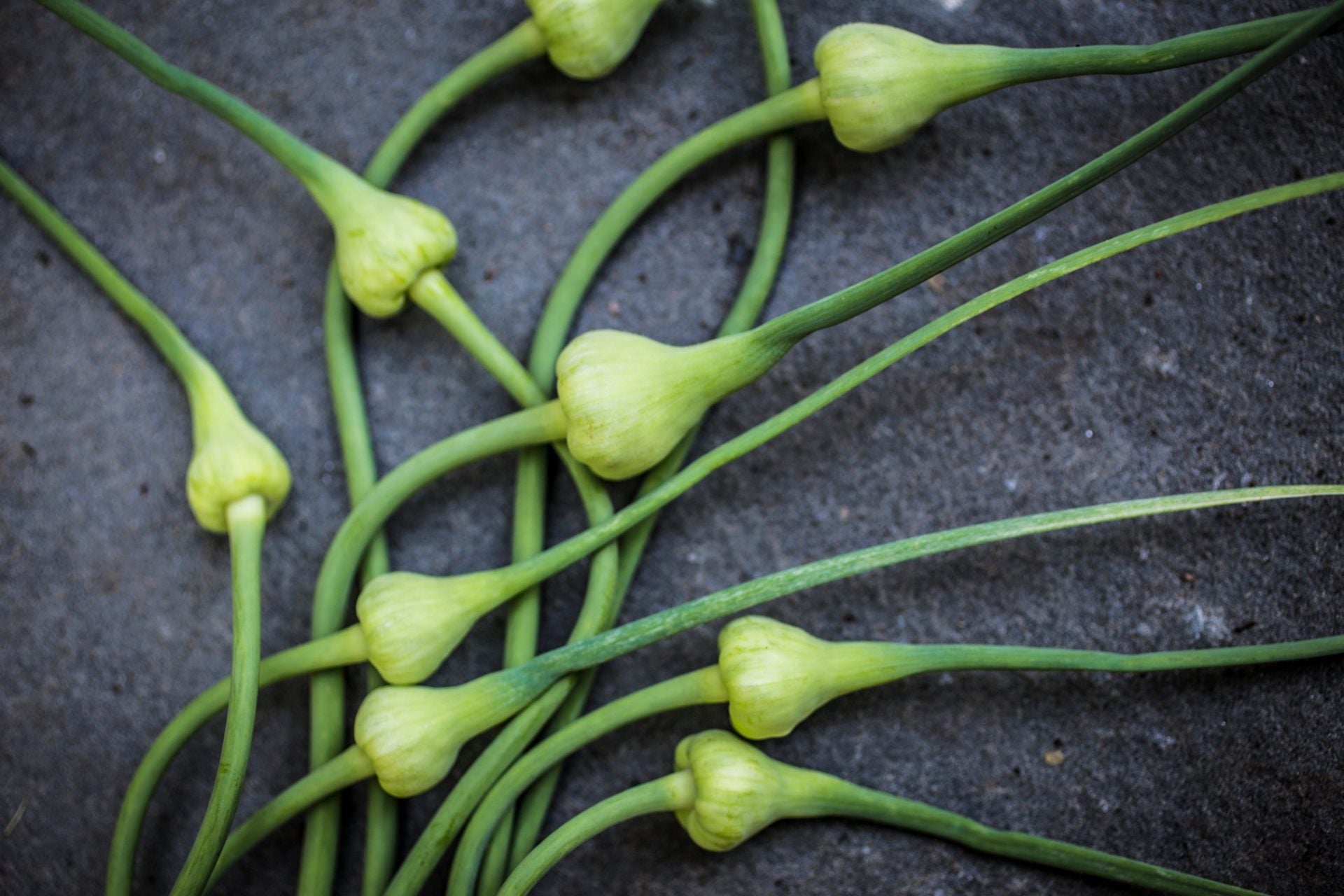
Curling garlic scape tendrils often include a bulge in the middle. This is the unopened flower of the plant, sometimes called the scape bulbil. It is also edible, though not as tender as the rest of the stem. Some people cut it off and discard it; others simply eat it. If left on the plant, it would open into a small cluster of papery purple-and-green florets, beautiful but a drain on the bulb you actually want to harvest in July.
Are There Health Benefits in Garlic Scapes?
Garlic scapes are a good source of protein, vitamin C, calcium, manganese, and the same sulfur compounds (notably allicin, formed when the plant tissue is cut or crushed) that give garlic cloves their reputation. Like cloves, scapes are associated in the popular literature with helping support heart health, healthy cholesterol levels, healthy blood pressure, and immune function, and may help calm inflammation in some people. The clinical evidence on garlic for these uses is mixed and not a substitute for medical care; treat the scape as a flavor and a food, not a remedy. If you want to dig deeper into kitchen-pharmacy garlic, our pieces on fermented garlic honey and when and how to plant garlic are good next reads.
Where Can You Get Garlic Scapes?
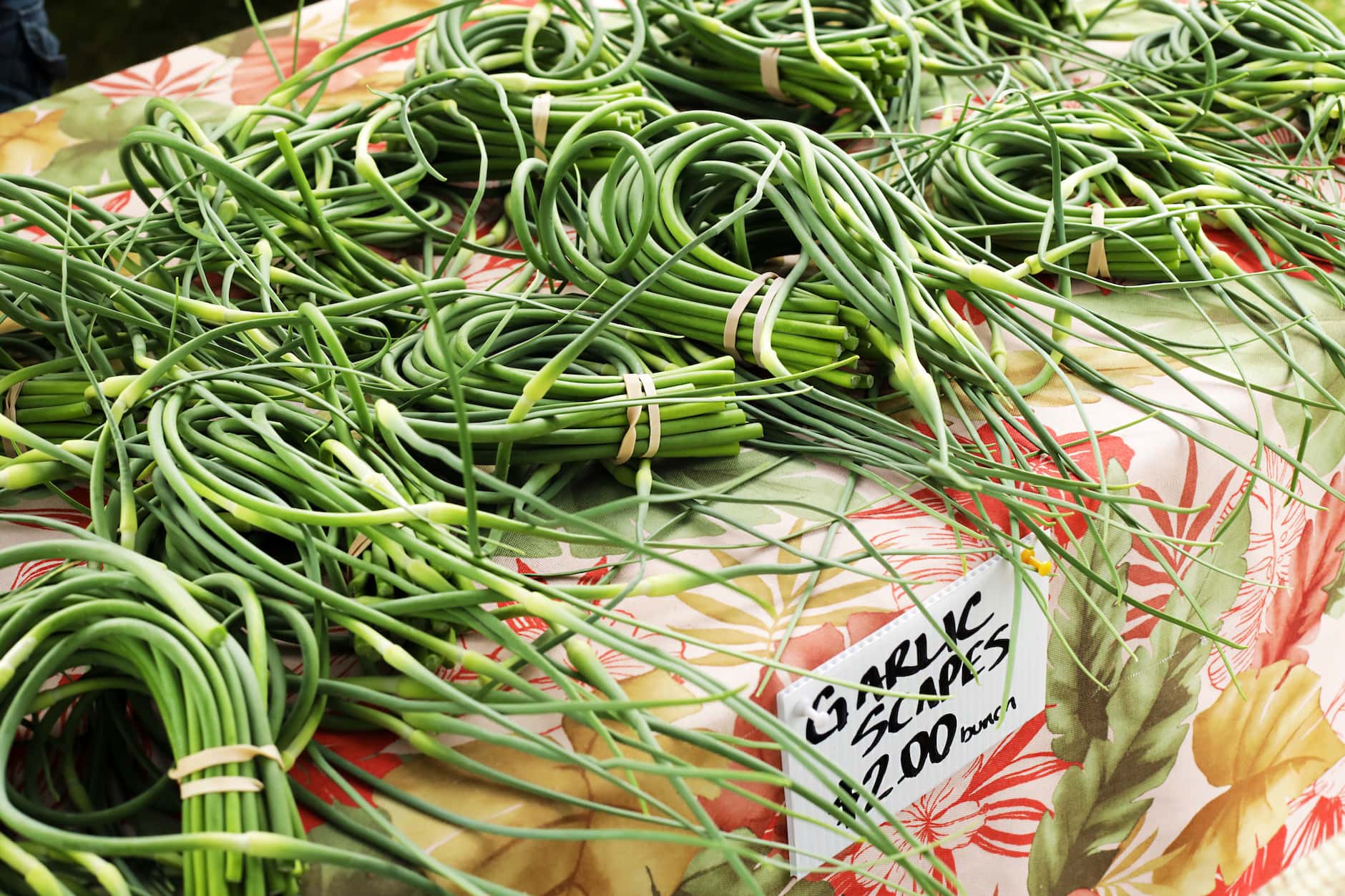
Garlic scapes are only available for a short window of time in late spring and early summer, usually mid-May through late June depending on your growing zone. They are most reliably found at farmers’ markets, in CSA boxes, or directly from small farms. You can even buy them online from specialty produce sellers. It is fine to store your scapes in the fridge, where they will stay fresh in a sealed bag for up to 3 weeks. They can also be chopped and frozen flat on a sheet pan, then transferred to a freezer bag for use through the autumn and winter; the texture suffers, but the flavor holds.
Harvesting Your Own
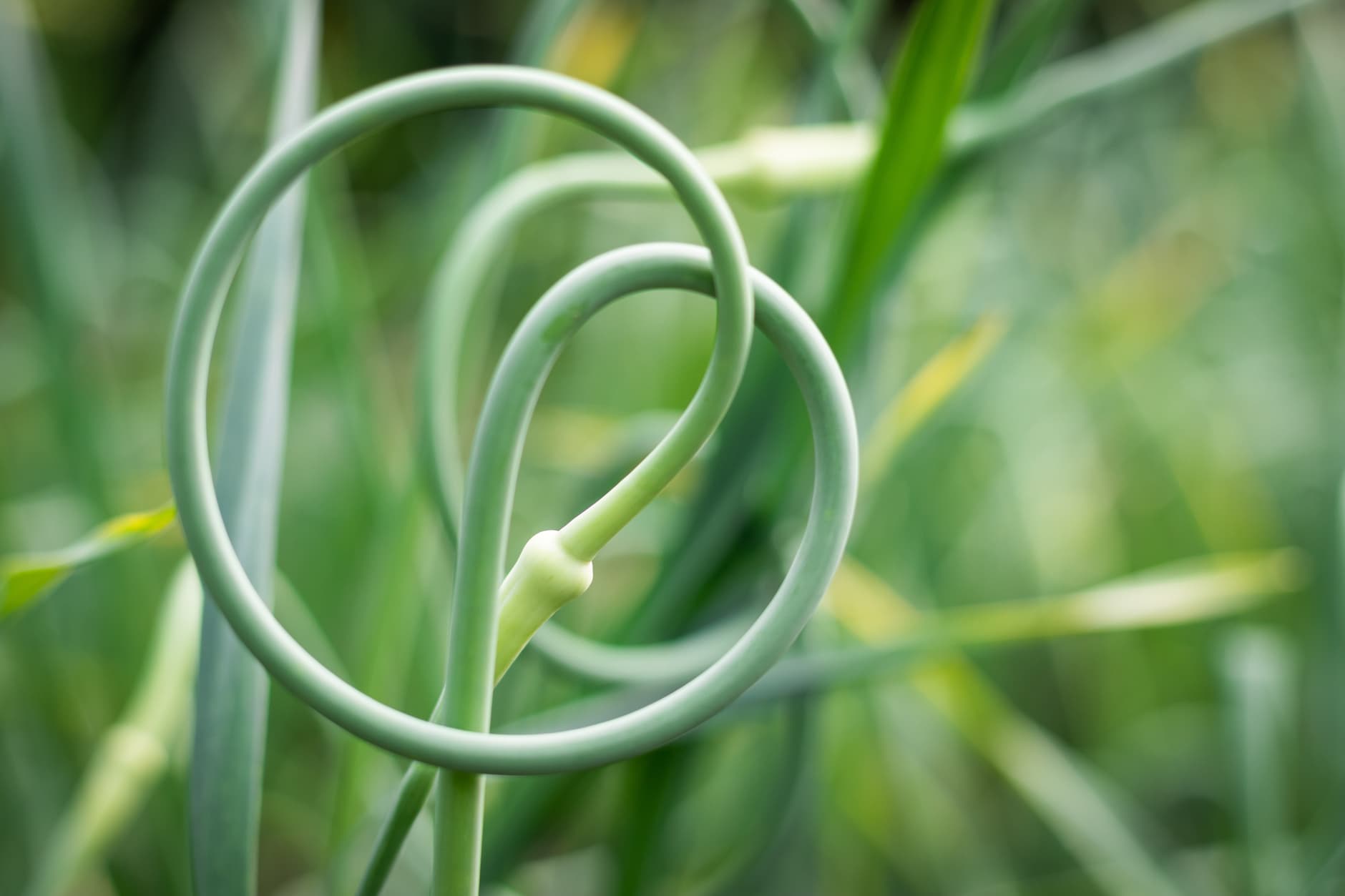
If you are growing garlic and you want big, flavorful bulbs, you will want to cut off the scapes as they emerge in early summer, before the plant flowers. The reason is so the plant can put its energy into the bulb rather than the flowers that would otherwise emerge. The classic rule of thumb is to cut the scape after it has made one full curl, but before the second curl, with sharp scissors or pruners just above the topmost leaf. Most growers see noticeably larger bulbs at harvest in July or August when they remove the scapes on time.
Garlic Scape Season, by Region (U.S.)
| Region | Approximate scape window | What to watch for |
|---|---|---|
| Pacific Northwest (zones 7-9) | Mid-May to mid-June | Early-cool spring can stretch the window an extra week or two |
| Upper Midwest & Northeast (zones 4-6) | Late May to late June | Cut after one full curl, before the second |
| Mid-Atlantic & Ohio Valley (zones 6-7) | Mid-May to mid-June | Heat wave shortens the window; check daily |
| Southern Appalachians (zones 6-7) | Early to mid-June | Hardneck varieties only; softneck rarely scapes |
| Mountain West (zones 4-6) | Late June to early July | Cool nights extend tenderness |
| Deep South & Gulf Coast (zones 8-10) | Mostly absent | Hardneck garlic struggles; very limited scape harvest |
Here are a few tasty ways to enjoy this flavorful garlicky treat:
Sauteed Garlic Scapes
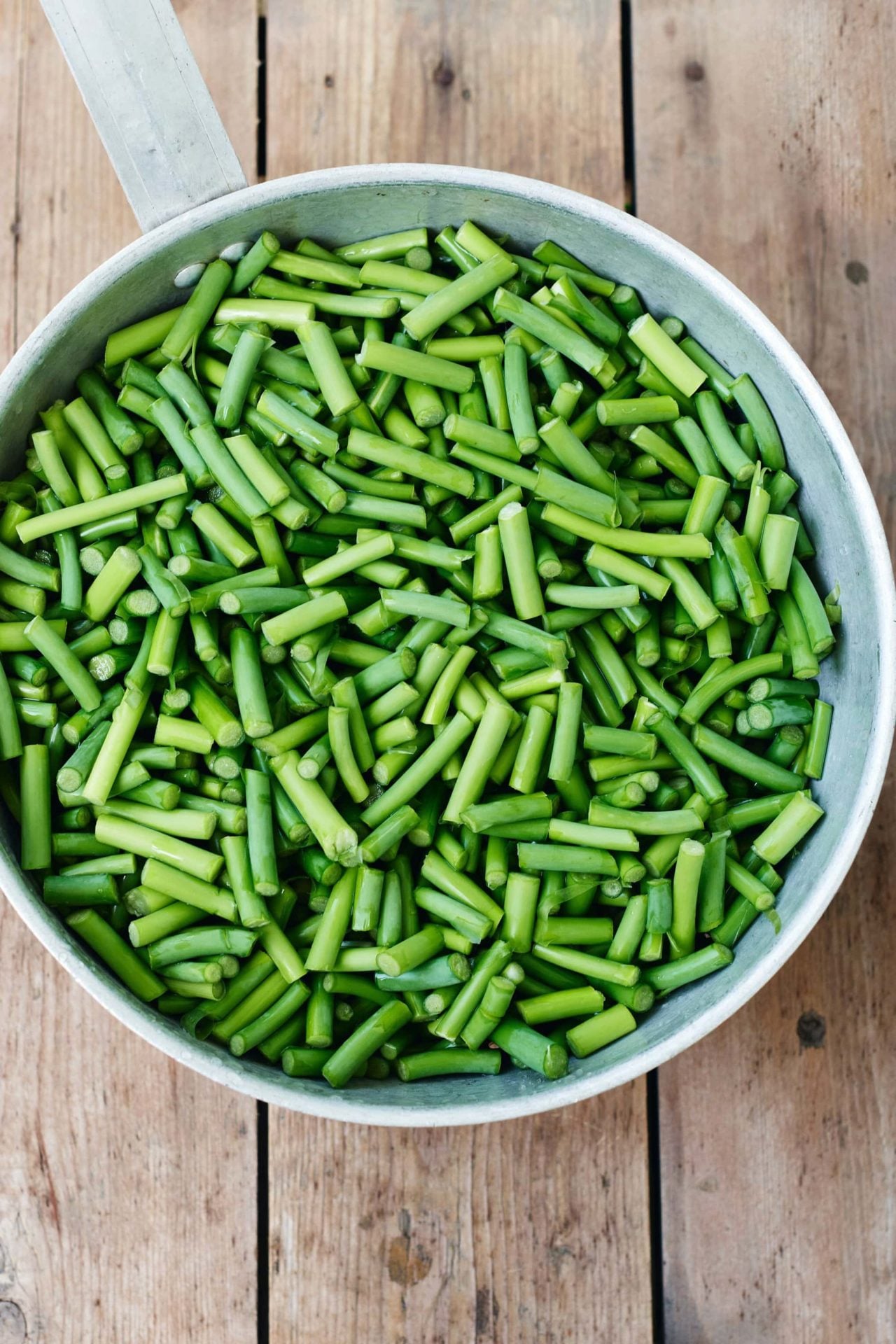
- Garlic ScapesOlive oil Salt and Pepper to taste
Place as many garlic scapes as you have, or will fit, into a large frying pan.
Drizzle with olive oil, just enough to coat each scape without pooling at the bottom of the pan.
Cook over medium heat, until the scapes start to brown.
Add salt and pepper to taste.
Garlic Scape Pesto
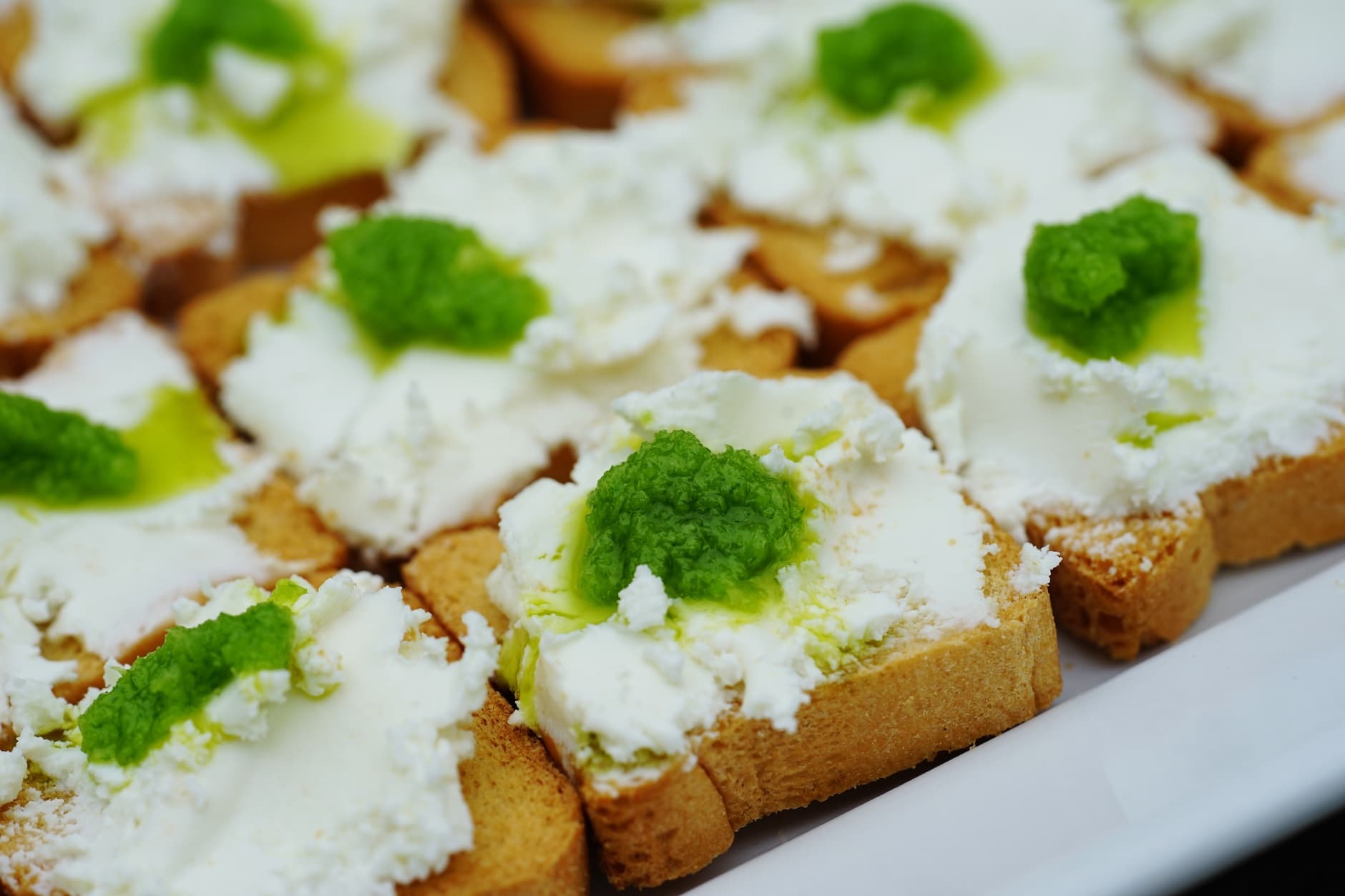
- 1 cup diced garlic scapes
- 1/3 cup pine nuts
- 3/4 cup olive oil
- 3/4 cup olive oil
- 1/2 teaspoon salt and black pepper to taste
Blend all ingredients together with a food processor or high-speed blender.
Garlic Scape Pizza
- 1 lb. whole-wheat pizza dough
- 1 cup pizza sauce
- 1 cup mozzarella cheese
- 6 garlic scapes
- olive oil
Allow pizza dough to sit and rise until it stretches easily.
Preheat your oven to 450 F.
Brush a large cookie sheet with olive oil and fit the dough to the pan.
Cover the dough with pizza sauce and top with cheese.
Cut the garlic scapes into 3-inch segments and place evenly over the cheese.
Bake for 15-18 minutes, until the crust is golden brown and the cheese is bubbly.
Garlic Scapes FAQ
What do garlic scapes taste like?
Milder and greener than a clove of garlic, somewhere between a scallion, a chive, and a shallot. Raw, they have a mild garlic bite; cooked, they sweeten and lean toward a roasted-garlic note. They work in any dish that would take regular garlic, and many that would not (like a fresh herb pesto or a green-onion-style side dish).
When is garlic scape season?
A short window from late spring through early summer, usually mid-May through late June in most U.S. growing zones. The exact dates shift by latitude, elevation, and the spring’s weather; warmer springs pull the window earlier, cool springs push it later. Watch your local farmers’ market in late May.
Why do farmers cut off the scapes?
Cutting the scape (the flower stalk) tells the plant to redirect energy from making seed back into building a bigger underground bulb. Most growers see noticeably larger bulbs at July or August harvest when they remove the scapes promptly. The scape itself is a culinary bonus, the original reason for the cut is bulb size.
Do all garlic plants make scapes?
No. Hardneck garlic varieties (Rocambole, Porcelain, Purple Stripe, and others) produce scapes. Softneck varieties (Artichoke, Silverskin), the kind sold most often in supermarkets and grown in mild climates, rarely throw a true scape. If you live in a warm-winter region, your garlic is probably softneck and the scape harvest will be sparse or absent.
How do I store garlic scapes?
In the fridge, in a sealed bag or container, for up to about 3 weeks. For longer storage, chop them, spread them on a parchment-lined sheet pan, freeze flat, then transfer to a freezer bag; they hold for 6 to 12 months for use in cooked dishes. The texture suffers in the freezer; the flavor holds well.
Are garlic scapes the same as green garlic?
No. “Green garlic” usually means an immature whole garlic plant pulled early in the spring (think of a scallion with a small undeveloped bulb at the bottom and a leafy top). A garlic scape is the curly flower stalk cut from a mature plant later in the spring. Both are pre-harvest garlic, but they come off the plant at different stages and look different.
What is the best way to cook garlic scapes for the first time?
Start with the sauteed-scapes recipe above. Trim the tough ends, cut to 1- to 2-inch pieces, and brown them in olive oil with salt over medium heat for 4 to 6 minutes. They will go from grass-green to bright with a few brown spots; that is the moment. Once you know what they should taste like, move on to pesto, pizza, soup garnishes, and grilling whole alongside burgers.
For more from the garlic patch, see when and how to plant garlic and our piece on fermented garlic honey. Once the scapes are gone, the bulbs are next.


Jaime McLeod
Jaime McLeod is a longtime journalist who has written for a wide variety of newspapers, magazines, and websites, including MTV.com. She enjoys the outdoors, growing and eating organic food, and is interested in all aspects of natural wellness.
- Jaime McLeod

- Jaime McLeod
- Jaime McLeod
- Jaime McLeod



Growing garlic in clay will make it stronger.
bury an old plastic container with the bottom
cut out. Fill with 60soil / 40 clay cat litter.
the garlic is contained and in optimal soil.
We regularly pick and eat wild garlic scapes, sautéed in butter. They are lovely as a side dish with meats and fish, and they’re FREE!!
Nelline, if you live where garlic will grow plant your cloves a couple of weeks before freezing. You want the cloves to sprout but not break the soil surface. Put lots of manure and a good covering of straw on your bed . In the spring the shoots will work their way up through the straw. You should also plant your own garlic year to year as it adapts to its own conditions.
As soon as the snow melts and the Rhubarb has pushed up, I lift the straw on my garlic patch looking for that first green shoot. Then I continue to watch it until sometime in mid June the scapes grow out. Once they make the turn, I harvest them. I make scape pesto and freeze a lot for those times in the winte when I need a reminder of spring. I also cook the stir fry the scapes to go in rice. They can be blanched and frozen.
We live at Lake of the Ozarks in Missouri. In the Spring we have what looks like chives growing EVERYWHERE. Cutting them down with the lawnmower emits a strong “garlic” odor. Are these edible? I often thought they would be good in salads and in cooking but was afraid to eat them!
They’re probably just wild onions. Garlic scapes are very long, very curly, and very fat. They don’t really look like chives at all. You can eat wild onions, absolutely, as long as you’re not treating your lawn with any harmful chemicals.
They are the best! Salivating as we speak! I use them in stir fry. Salads. Just about go in everything! I am gonna cut up and freeze for the winter. I actually look fwd to these,more than garlic it self.Maybe bc its spring! And no peeling.
Yum!
Onions are generally broken near the ground when flowering stalks appear, and this is supposed to fatten the bulbs. I imagine the same is true of garlic: let the young leaves stay on to build foodstores for the bulb, but as soon as you see signs of flowering, break or cut them off. Garlic, and some onions, form bulbils in the flowerhead, and you don’t want energy diverted there. It is very difficult to get any Allium to bulb in peninsular Florida, however.
Great growing hint about cutting the scapes off to send more energy to the bulb. I’ll have to remember that next growing season. I wonder if the same would work for onions?
Nelline, if you are in Zone 9 or warmer, garlic won’t bulb, and it won’t even love long. Try using Tulbaghia (society garlic) scapes. If you live in Zone 8 or cooler, check one of the more extensive catalogs for different varieties of garlic. Generally, hardnecks require more chill than softnecks. Also, call your local agricultural extension and see what they recommend. Plant when the moon is on the decrease, and make sure your plants are getting enough phosphorus.
Only HARDNECK garlic will grow scapes (they eventually turn into hard necks and a flower head). There are many varieties of hardneck garlic
I have some garlic plants that do not make big bulbs of garlic can you tell me what i need to do to help them grow?Are you suppose to pull the dirt away from them like you do potatoes?Thanks.NElline.
Plant them in the Fall. I live is zone 3-4 we plant in October and harvest the next September, my garlic scapes are ready now.
I live in zone 3b. I recently read that fall planted garlic should be ready to harvest 4-6 weeks after the appearance of the scapes. That would mean harvesting my fall planted garlic into mid-late July, since I’ve had scapes for about a week now on some of my garlic. Isn’t September the time to harvest spring planted garlic? Certainly not saying your wrong, I’m just confused. Thank you for any further information you can share about harvesting garlic.
Depending on where you live, most garlic planted in the Fall will be ready to harvest in July or August. Warmer climates could be as early as June. The best way to tell if your garlic is ready is to wait until the bottom 2 or 3 leaves are yellowed or have turned brown. This will make sure your garlic has enough paper protection to dry for the upcoming winter.
Wild garlic can be any number of native or escaped species, but yes, their scapes are edible. Test for strength. If this species is fairly mild, use it like garlic chives. If it’s stronger, see what amount of cooking brings it to the desired strength. Strong-tasting kinds can also be used to infuse salad oil or simply rubbed on the bowl before making salad. They can also be minced and added to a hot soup or stew after the heat is turned off, about five minutes before serving.
Because true garlic is difficult to grow in peninsular Florida, many people use the leaves and flowers of Tulbaghia (society garlic) the same way. The flavor is both coarser and more fleeting than that of true garlic, and the method of adding it to a hot dish or drawn butter after the heat is off, five to ten minutes before serving, seems to hit the right balance. It also works well in marinades.