

Queen Anne’s Lace: Identification, Folklore, Edibility, and the Toxic Lookalikes to Avoid
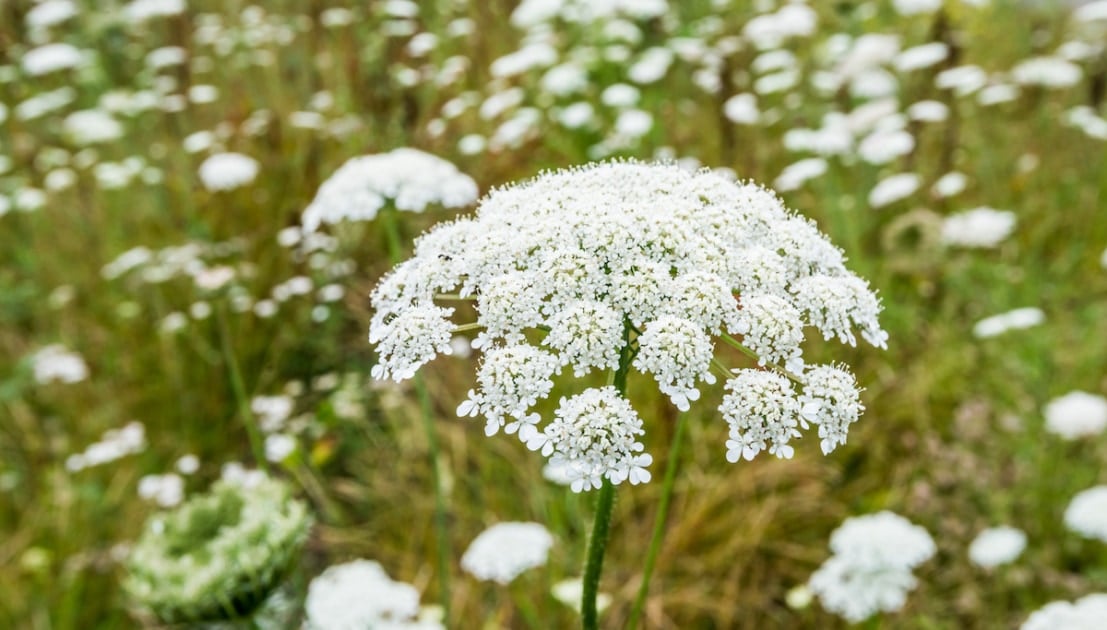
Quick Reference: Queen Anne’s Lace
- Botanical name: Daucus carota. The wild ancestor of the cultivated carrot.
- ID: hairy stem, lacy white umbel, one tiny purple-black floret in the center, smell of carrot when crushed.
- Edibility: first-year root is edible (small, white, woody). Best wild carrot use is the seed (cumin-like flavor).
- DANGER: easily confused with poison hemlock (Conium maculatum), which is deadly. Hemlock has SMOOTH purple-blotched stem and NO carrot smell.
- Tool: the Almanac’s foraging safety rules.
On this page
Related Almanac guides
Queen Anne’s lace is wild carrot, the European ancestor of every supermarket carrot you have ever eaten. It is also one of the most-confused wildflowers in North America because it grows in the same roadside ditches as poison hemlock, the most poisonous plant in the eastern US. This guide is how to identify Queen Anne’s lace, the folklore behind the name, what is actually edible on the plant, and the four visual cues USDA NRCS uses to distinguish it from its deadly lookalike.
How to Tell Queen Anne’s Lace from Poison Hemlock
Per UMN Extension’s wild parsley-family identification guide, four visual cues separate the safe-edible from the deadly.
- Stem. Queen Anne’s lace: hairy, solid green, no markings. Poison hemlock: smooth, with distinct purple blotches or streaks.
- Smell. Queen Anne’s lace: distinct carrot smell when leaves are crushed. Poison hemlock: musty unpleasant smell, no carrot scent.
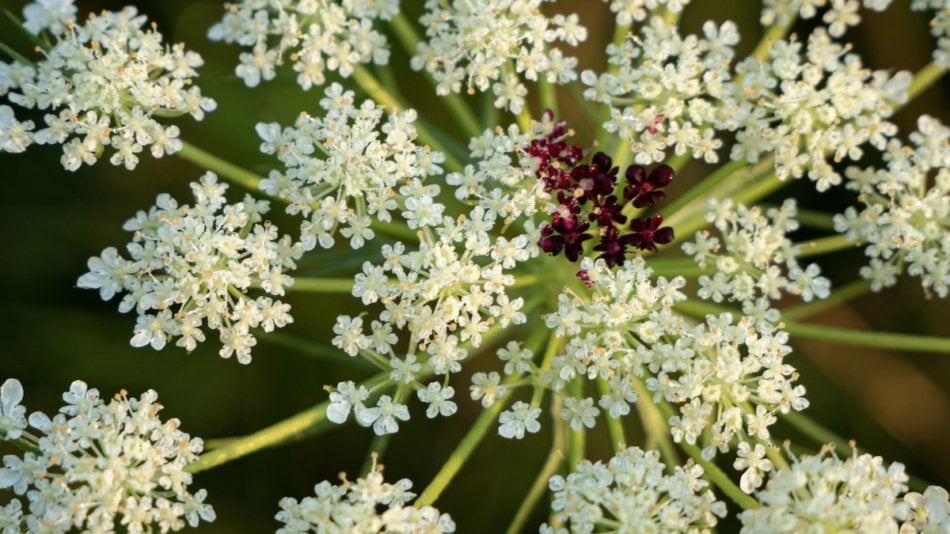
- Central flower. Queen Anne’s lace: usually has one tiny dark purple-black floret in the very center of the umbel. Poison hemlock: no central spot.
- Size. Queen Anne’s lace: 1 to 4 feet tall. Poison hemlock: 4 to 10 feet tall (much larger).
- If in doubt, do NOT touch. Poison hemlock can cause skin reactions on contact and is fatal if ingested.
The Folklore Behind the Name
Per Britannica’s Queen Anne’s lace entry, the common name traces to one of two English queens.
- Queen Anne (1665 to 1714) of England. Folklore credits the central dark floret to a drop of blood she pricked while making lace, lending the plant its name.
- Saint Anne (the Virgin Mary’s mother). Alternative folk reading; the plant was associated with Anne and used in protection charms.
- European spread. The plant has been cultivated and foraged for over 5,000 years; the cultivated carrot is selectively bred from Queen Anne’s lace.
- The species name carota: Latin for carrot, confirming the relationship to its cultivated descendant.
Queen Anne’s Lace Lore, Symbolism, Medicine, ID, and Growing (Detail)
Below are the original detail sections on legends and lore, symbolism, carrot relationship, medicinal use, lookalikes, ID tips, and growing notes.
Queen Anne’s Lace Legends and Lore
How did Queen Anne’s Lace get its name? You probably guessed that it has to do with Queen Anne, but like most tales and legends surrounding flowers, there are many.
One tale claims that the origin of the name “Queen Anne’s lace” comes from the lace that was popular during the days of King James I and his wife, Queen Anne, who lived between 1574 and 1619. Another states that the name comes from her headdress, which was lacy enough that it resembled the tightly-knit showy white flowers.
But historians claim it’s more likely that any legends associated with the flower actually refer to Queen Anne II, who lived between 1665 and 1714. She had only one surviving child in all of her 18 pregnancies. Because of that fact, the flower is often associated with the loss of children.
Some believe the flower got its name because while Queen Anne II was tatting white lace, she pricked her finger with the tatting needle, causing a drop of blood to fall on the lace. This is why the white flowers have dark red flowers in the center.
In the 18th century, English courtiers referred to this flower as “living lace.” According to this legend, the “living lace” name came from a contest that the second Queen Anne II hosted for her ladies-in-waiting. She challenged them to produce a piece of lace as delicate and beautiful as the flower, but none could make lace that could outshine the real thing.
Queen Anne’s Lace Symbolism
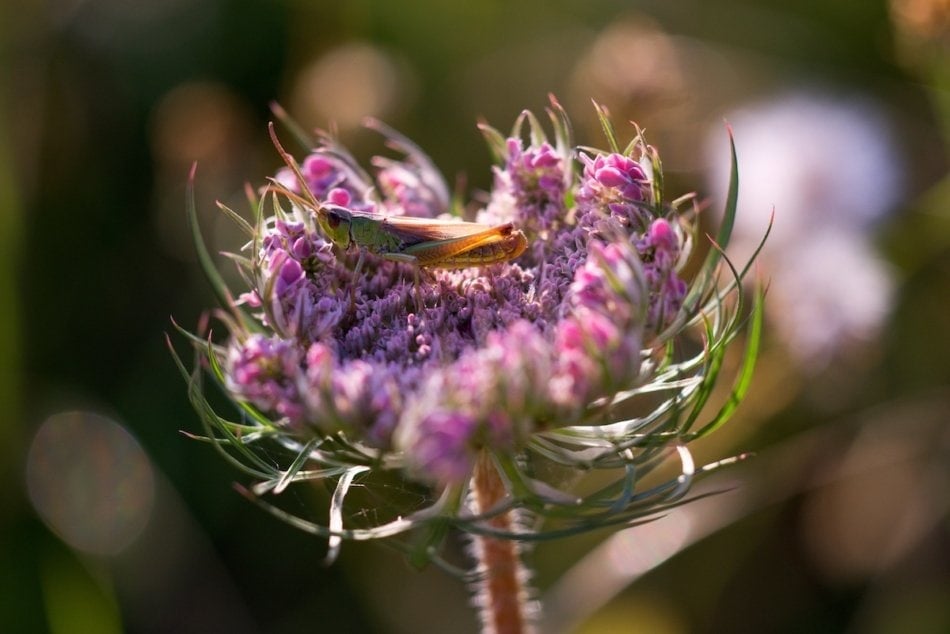
As with many flowers, Queen Anne’s Lace has its own unique symbolism and meaning. Because Queen Anne’s Lace features delicate, lace-like flowers, it is associated with beauty, and many women added the flower to their baths in hopes of attracting love.
Because the flower is sometimes referred to as “bishop’s flower,” it symbolizes safety, sanctuary, and refuge. Although another interpretation is due to the flower’s resemblance to a bird’s nest when it goes to seed, it then becomes the perfect symbol of the sanctuary of a happy home.
Queen Anne’s Lace As Medicine?
Queen Anne’s Lace also has a history of medicinal use.* More than 2,000 years ago, Hippocrates prescribed crushed Queen Anne’s Lace seeds to prevent pregnancies. Modern research today suggests that there may have been some merit to this, so it is recommended that women who are pregnant or hoping to conceive should avoid both the flower heads and seeds.
Over the years, this flower has also had a variety of other uses. Herbalists historically used it as an antiseptic, to soothe the digestive tract, and as a diuretic. Others grated the root of Queen Anne’s lace and mixed it with oil to calm topical burns.
Consuming the purple bloom in the center of the flower was once believed to cure epilepsy.
Queen Anne’s lace flowers may also be used to make a natural pale yellow dye.
*This information is not intended as medical advice.
Watch Out For These Queen Anne’s Lace and Lookalikes!
If you’re planning to pick Queen Anne’s Lace, learning to identify the lookalikes is crucial because some of them are dangerous. The most common lookalikes you’ll find in the wild are:
- Giant hogweed (Heracleum mantegazzianum)
- Poison hemlock (Conium maculatum L.)
- Cow parsley (Anthriscus sylvestris).
Both poison hemlock and giant hogweed are poisonous to humans, pets, and livestock when ingested. It’s best to avoid cow parsley as well.
Giant hogweed and cow parsley also have a sap inside the leaves and stalks that causes burns to the skin. Additionally, even touching the poison hemlock plant may cause a skin reaction in some people.
So how do you tell the difference? Here are some tips:
How To Grow Queen Anne’s Lace
Queen Anne’s Lace is a biennial, which means that has a two-year cycle. In the first year, the plant displays leaves and shoots. In the second year, it begins to form clusters of small white flowers, which can self pollinate or get help from bees and other pollinators. Each plant can produce up to 40,000 seeds, one for each of the tiny white flowers (but not for the dark red or purple flower, if present, this one is sterile). While flowering times vary from region to region, you can usually spot the white flowers around mid to late summer.
This flower grows in 48 states, but it’s not native to North America. It was brought here by early European settlers who grew it for medicinal purposes, and it has since spread across the country to grow wild. It’s listed as a weed rather than as a native plant, and 14 states list Queen Anne’s Lace as an invasive species. You’ll often find it growing in abandoned fields and lots, burned areas that are starting to recover, and other places where the ground has recently been disturbed.
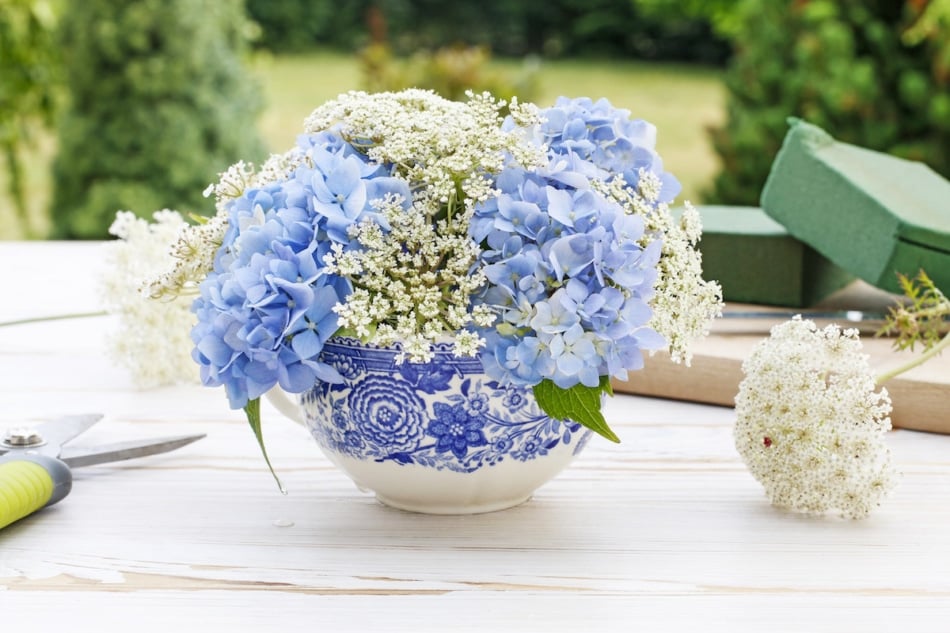
Today, Queen Anne’s Lace is occasionally used in floral arrangements, and it’s a great flower to pick if you’re hunting wildflowers to make your own bouquet. Just take care to steer clear of the lookalikes!


Queen Anne’s Lace FAQ
Is Queen Anne’s lace the same as wild carrot?
Yes. Queen Anne’s lace (Daucus carota) is wild carrot. It is the European ancestor of the cultivated carrot, selectively bred over 5,000 years from this wild species into the orange root vegetable we know today.
Is Queen Anne’s lace edible?
First-year roots are edible but small, white, and woody, very different from the cultivated carrot. The seeds (cumin-like flavor) are more common as a wild food. NEVER eat any part if you have not verified it is Queen Anne’s lace and not poison hemlock.
What is the difference between Queen Anne’s lace and poison hemlock?
Queen Anne’s lace has a hairy solid-green stem, a distinct carrot smell when crushed, a tiny purple-black floret in the center of the umbel, and grows 1 to 4 feet. Poison hemlock has a smooth purple-blotched stem, no carrot smell, no central spot, and grows 4 to 10 feet tall. If in doubt do not touch.
Why is there a purple flower in the middle of Queen Anne’s lace?
The dark central floret is a real botanical feature. Most theories suggest it mimics an insect to attract pollinators. English folklore reads it as a drop of Queen Anne’s blood from her lacemaking needle. Botanically the floret is sterile and serves the pollinator-attraction role.
Is Queen Anne’s lace invasive?
Yes in many US states. It is listed as a noxious weed in some northern states because it crowds out native meadow flora and is unpalatable to livestock. Federal listing varies; consult your state extension.
Can you eat Queen Anne’s lace seeds?
Yes. The seeds have a flavor similar to cumin or caraway and are used in wild-food cooking. Historically used as a folk contraceptive (no clinical evidence supports this and the use is not recommended). Always positively ID the plant before harvesting any seed.


Amber Kanuckel
Amber Kanuckel is a freelance writer from rural Ohio who loves all things outdoors. She specializes in home, garden, environmental, and green living topics.
- Amber Kanuckel

- Amber Kanuckel

- Amber Kanuckel
- Amber Kanuckel





Tatting doesn’t involve a needle only a shuttle , so the ignorant belief of Queen Anne pricking her finger shouldn’t be included in any discussion of the subject
I have a recipe for making jelly with the heads of this plant and it is unique and delicious!! Love this plant!!
Would you care to share it? I’d love to know it.
Just wanted to add a couple of things from my childhood. My Dutch grandmother showed me how to make a ladies head and hat out of the blossoms, by using a closed bloom for the head and an open bloom placed upright on it.
Also, Queen Annes Lace is beautiful when placed in a vase with water infused with food coloring.
This is horrible. What a terrible way to write about this plant. Only one or two small paragraphs saying it’s nonnative and not mentioning it acts invasively in high quality areas. This article focuses too much on how many “benefits” it has and not enough, if at all, about how you should absolutely not plant this and it’s disruption to the ecosystem. Shame on you. And from the FARMERS ALMANAC! Get someone who knows native plants and what is best for the earth.
I think the article did a thorough job on identifying and giving credence to this summer plant.
Nice article! The one thing you did not state is that Queen Anne’s Lace is the flower that has the red flower(s) at the center while the look-likes do not. The red flowers at the center of Queen Anne’s Lace has always been what I used to distinguish between it and the look-alikes.
“Some believe the flower got its name because while Queen Anne II was tatting white lace, she pricked her finger with the tatting needle, causing a drop of blood to fall on the lace. This is why the white flowers have dark red flowers in the center.” -from above.
Tatting doesn’t use needles