

Popular Christmas Tree Varieties: The 5 Most Fragrant
With so many varieties to choose from, there's a reason why these 5 make the cut as the "perfect" Christmas trees.
Quick Reference: Popular Christmas Tree Varieties
- Most fragrant: Balsam fir, with Fraser fir a close second.
- Best needle retention: Fraser fir (often lasts up to 6 weeks), Scotch pine, and Colorado blue spruce.
- Best for heavy ornaments: Fraser fir, Scotch pine, and blue spruce, all with stiff, upturned branches.
- Fullest shape for big rooms: Douglas fir.
- Sold each year: about 25 to 30 million real trees in the US, per the National Christmas Tree Association.
Nothing says Christmas quite like a fragrant, real tree. Most families who go real over artificial pick their tree sometime between Thanksgiving and Christmas, hauling it home strapped to the roof of the car. According to the National Christmas Tree Association, roughly 25 to 30 million live Christmas trees are sold across the US every year.
So which one makes the perfect Christmas tree? There is no single answer, and that is part of the fun. Growers raise about 35 different species especially for the holidays, and the right pick comes down to a handful of things: size, shape, needle feel, branch strength, fullness, and fragrance. A Charlie Brown tree has its charm, but it is rarely the one families choose to gather around on Christmas morning. Below are the five most popular Christmas tree varieties, plus how to choose one and keep it fresh.
How to Choose a Christmas Tree That Lasts
Before you fall for the first tree on the lot, run two quick tests. Grab a branch and pull your hand gently toward you: fresh needles stay put, while a shower of green needles means the tree was cut weeks ago. Then bounce the trunk lightly on the ground. A few inner brown needles dropping is normal, but a heavy fall of green needles is not. Cornell and Michigan State University both point out that a fresh cut and a full water reservoir matter more than the species when it comes to how long a tree holds up indoors. Michigan State University Extension keeps a plain-English rundown of tree types and care at its Christmas tree resource page.
Match the tree to your room, too. Measure your ceiling before you shop and leave about a foot for the topper and stand. Soft-needled firs like Douglas are gentle on little hands, while the stiff, sharp needles of blue spruce and Scotch pine hold heavier ornaments and can double as a deterrent for curious cats. If your holiday travel depends on the weather, our long-range forecast can help you pick a clear, crisp weekend for the trip to the tree farm.

Top 5 Most Popular Christmas Tree Varieties
Although many kinds of evergreens grow in different regions across the country, these five turn up on lots and in living rooms more than any others. Here is what sets each one apart.
1. Balsam Fir
The Balsam fir is the most fragrant of the bunch, and that scent is a big reason it is the most popular Christmas tree variety year after year. It is a durable tree with short, flat, dark green needles. Balsam does dry out quickly, so keep an eye on the water reservoir and top it off often.
Fun Fact: The tree was named for the balsam, or resin, found in blisters on the bark, which was used to treat wounds during the Civil War.
2. Douglas Fir
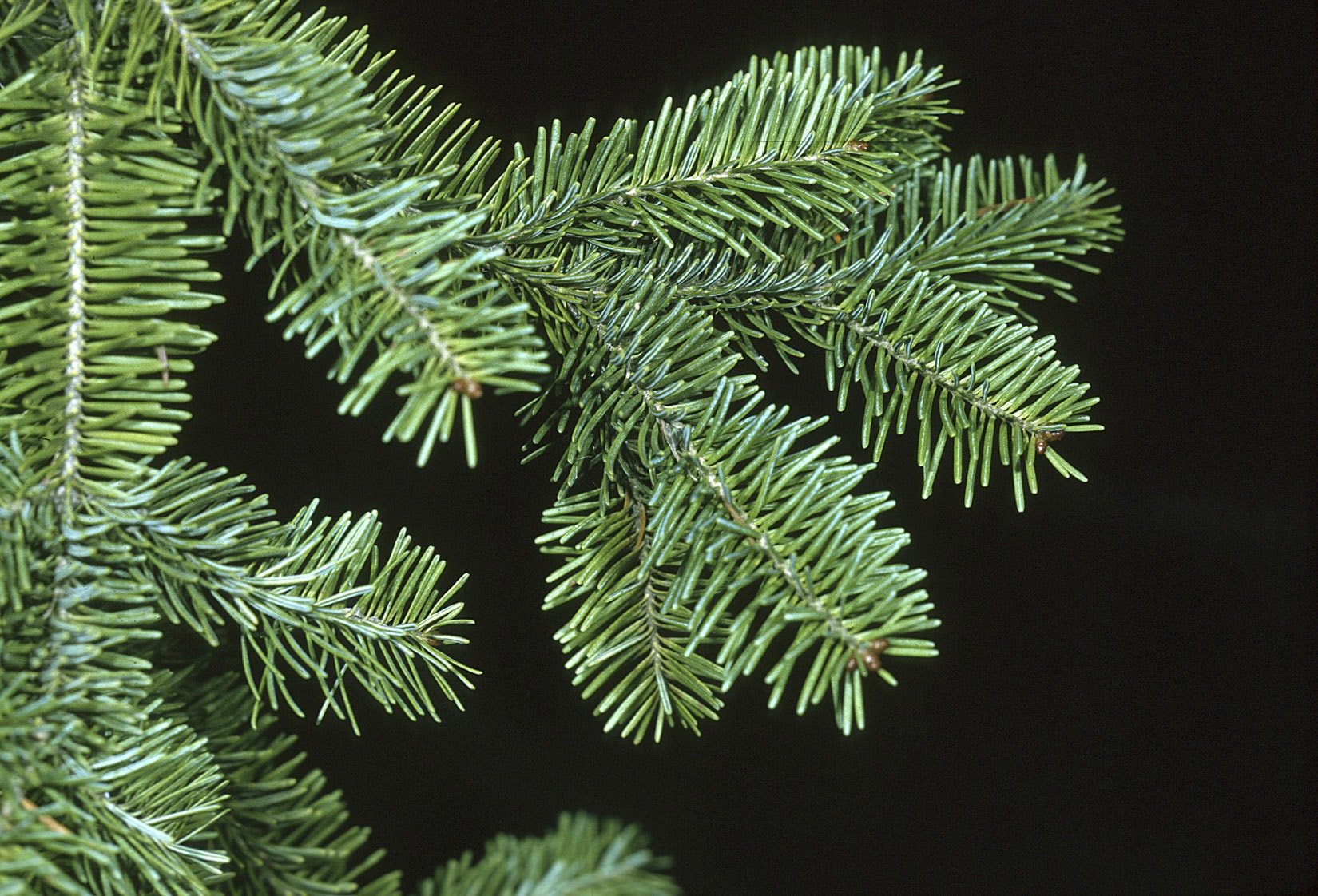
A very common variety, Douglas firs are favored for their near-perfect conical shape and their fullness, which makes them great for filling a big room. The needles are soft and flat with a blunt tip, so they are friendly to bare hands. Because the boughs are supple, reach for lighter ornaments on this one.
Fun Fact: The tree was named after botanist David Douglas, who studied it in the 1800s.
3. Fraser Fir
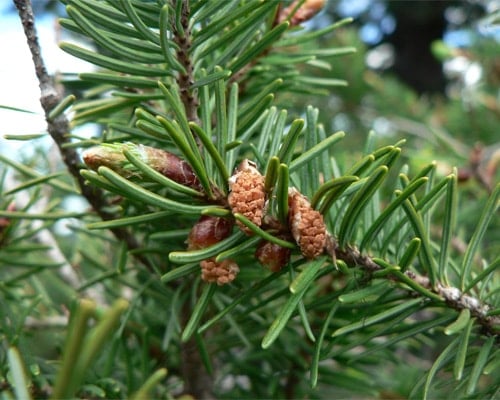
You can spot a Fraser fir by its needles, which are dark green on top and silver underneath. The branches curve slightly upward and are stiff, so they hold ornaments well. Fraser firs also last a long time. It is not uncommon for one to stay handsome as long as 6 weeks, and it holds onto its needles beautifully. After the Balsam, the Fraser is especially fragrant, which is why it lands near the top of nearly every list.
Fun Fact: It takes 7 to 10 years to grow a 6 to 7 foot Fraser fir.
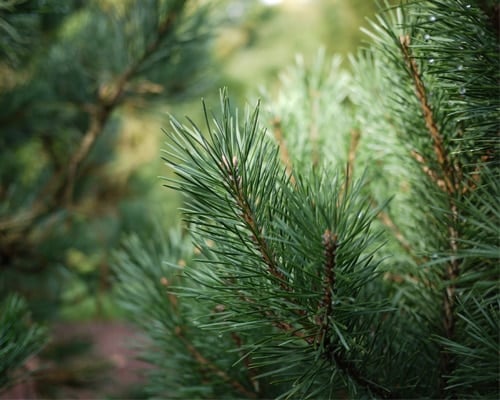
4. Scotch Pine (or Scots Pine)
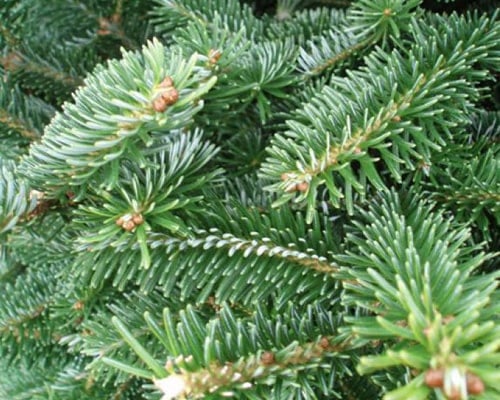
The Scotch pine earns its spot because it rarely sheds its needles and holds water well after it is cut. Its sturdy branches curve upward, which makes it a fine tree for heavier ornaments. One word of caution: wear gloves when you handle it, because those needles can be sharp.
Fun Fact: The Scotch pine is the most widely planted pine tree in the US.
5. Colorado Blue Spruce
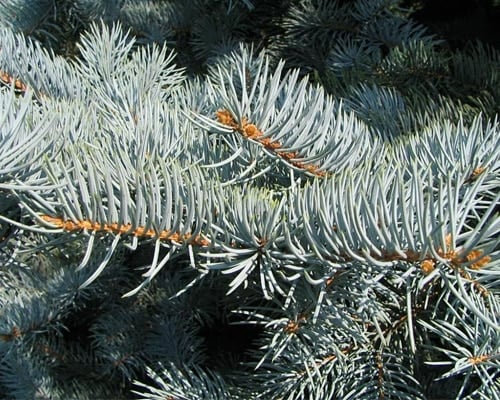
This evergreen is hard to miss thanks to its beautiful blue hue. It is a popular Christmas tree because it rarely drops its needles, and its stiff branches hold ornaments well on a picture-perfect pyramid shape. The needles are sharp, so handle with care, though many families count that as a plus since it keeps curious pets at bay. When you decorate, keep the tree’s silvery-blue color in mind as you choose your lights and trim.
Fun Fact: A blue spruce is the living Christmas tree planted on the south lawn of the White House.
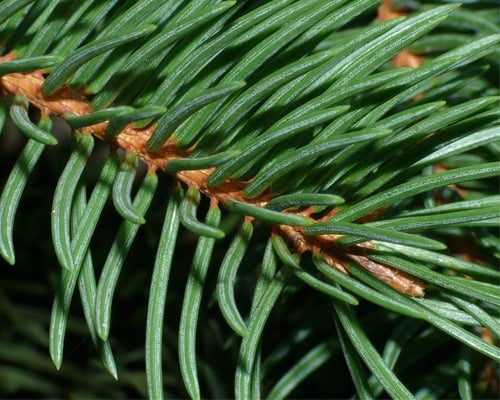
Bonus Fun Fact: The tree usually chosen for the Rockefeller Center Christmas Tree in New York City is a Norway spruce (pictured below). You can identify one by its needles, which radiate equally in all directions around the branch, like a bristle brush.
Caring for Your Real Christmas Tree
A little care keeps any of these varieties looking fresh through the season. When you get the tree home, saw about a half inch off the base to open up the trunk so it can drink, then stand it in water within a couple of hours. Keep the reservoir full every day, since a fresh tree can take up a surprising amount in the first week. Set it away from heat vents, radiators, and the fireplace, both to slow drying and to keep it safe. Once the needles turn brittle and the tree stops drinking, it is time to take it down.
If a real tree has you thinking about growing your own evergreens, or timing other winter chores by the calendar, our Gardening by the Moon calendar lays out the traditional Best Days month by month.
Where These Trees Grow Across the Country
Part of a tree’s popularity is simply which evergreens thrive nearby. Growers raise different favorites region by region, though most types now ship widely enough that you can find them almost anywhere.
- Northeast and Great Lakes: Balsam fir and Fraser fir country, with plenty of Scotch pine on cut-your-own farms.
- Southeast and Appalachians: the Fraser fir’s home ground, especially the high elevations of North Carolina.
- Mountain West: Colorado blue spruce and other spruces, well suited to cold, dry winters.
- Pacific Northwest: Douglas fir and noble fir, grown here in large numbers and shipped across the country.
Wherever you live, the local farm crew can point you to the variety that grows best in your area and holds up longest in your home. If you like to plan holiday outings around the sky, our full Moon dates and times make it easy to line up a moonlit trip to the tree lot.

Join the Discussion
Which type of Christmas tree is your favorite? Tell us in the comments below. And if you are still weighing your options, remember there are pros and cons to real versus fake before you decide.
Popular Christmas Tree Varieties: Frequently Asked Questions
What are the most popular Christmas tree varieties?
The five most popular Christmas tree varieties are the Balsam fir, Douglas fir, Fraser fir, Scotch pine, and Colorado blue spruce. The Norway spruce, best known as the Rockefeller Center tree, is another favorite. Each has its own strengths in scent, needle retention, and branch strength.
What is the most fragrant Christmas tree?
The Balsam fir is the most fragrant Christmas tree, which is a big reason it is the most popular variety. The Fraser fir comes in a close second. If scent is what you love most about a real tree, either fir will fill the room with that classic Christmas smell.
Which Christmas tree holds its needles the longest?
The Fraser fir is a standout for needle retention and can stay fresh as long as 6 weeks with good care. Scotch pine and Colorado blue spruce also rarely shed their needles. A fresh cut and a water reservoir you keep topped off matter just as much as the variety you choose.
How do I keep a real Christmas tree fresh?
Saw about a half inch off the base when you get home, stand the tree in water within a couple of hours, and keep the reservoir full every day. Set it away from heat vents, radiators, and the fireplace to slow drying. When the needles turn brittle and the tree stops drinking, it is time to take it down.
How many real Christmas trees are sold each year?
The National Christmas Tree Association reports that roughly 25 to 30 million live Christmas trees are sold in the US every year. Growers raise about 35 different species especially for the holidays, so shoppers have plenty of choice on the lot.
How long does it take to grow a Christmas tree?
It takes patience. A single Fraser fir needs 7 to 10 years to reach a sellable 6 to 7 foot height. That slow growth is one reason cut-your-own farms rotate their fields and replant every season.
Should I get a real or an artificial Christmas tree?
Both have their fans. Real trees bring fragrance and support local farms, while artificial trees are reusable and low-maintenance. We break down the trade-offs in our guide to the real versus fake Christmas tree dilemma so you can decide what fits your family.

This article was published by the Staff at FarmersAlmanac.com. Any questions? Contact us at [email protected].
- Farmers' Almanac Staff

- Farmers' Almanac Staff

- Farmers' Almanac Staff

- Farmers' Almanac Staff


Concolor!!! Prettiest! Bit hardest to find
The Noble fir is the most widely used tree in Western US by a wide margin. The Grand Fir is by far the most fragrant tree. Almost nobody uses Scotch Pine anymore. Keith Con Color is Concolor or White fir. No matter where you live the native trees tend to be more Charlie Brown because they are not tended like they are at tree farms. Just ask your local Nursery what the local tress are Rose Marie
The tree I’m looking for will have a fragrance that will cover the whole house Rena small one. They also have a lot of sticky sap on them. I live in Alabama but will drive anywhere at Christmas to get one!
I LOVED the tree we had when I was a child upstate NY, you found them in the woods, you could see threw the branches, long needles, like Charlie Brown tree, what are they called??? When you hung decorations and lights you could see them! Not Full of needles.
I’m trying to find out if I can plant a Frazier fir tree in my yard. I live in Amite county Ms.
I’m guessing the name is Con Color ? Beautiful tree, with a citrus smell to it.
I’m not sure what variety of trees we had back in the 50’s and 60’s as kids growing up in Mobile Alabama, but they were all “Christmas trees” and we loved all of them. Never never never did we have a fake tree.