

March Birthstones: Aquamarine and Bloodstone Meanings & History
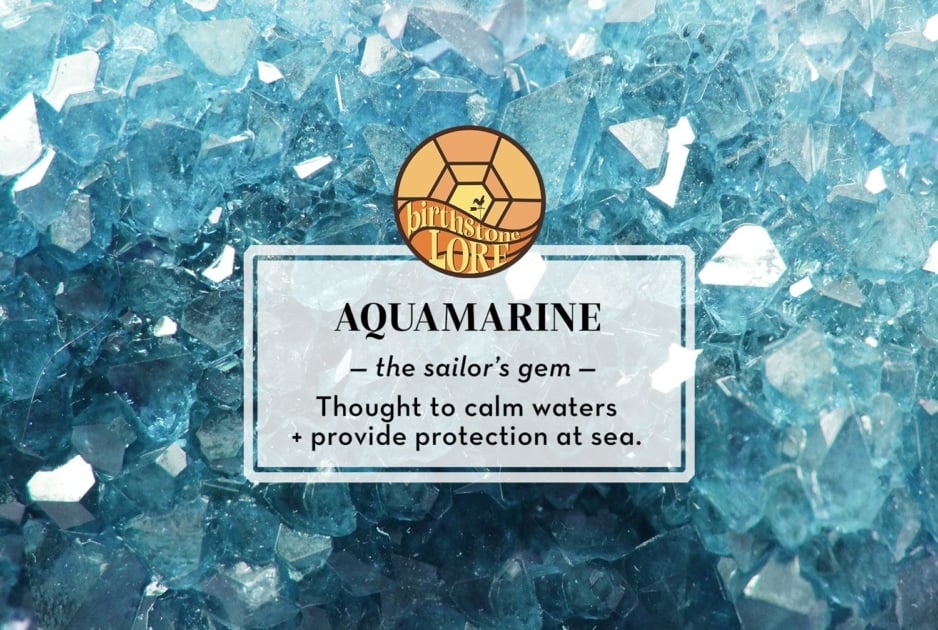
Quick Reference: March Birthstones
- Primary stone: Aquamarine, a sea-blue variety of beryl.
- Traditional second stone: Bloodstone (also called heliotrope), a dark green chalcedony with red iron oxide flecks.
- Aquamarine meaning: From Latin “aqua marina,” water of the sea. Linked to calm, courage, and safe passage.
- Bloodstone meaning: Tied to a Christian legend about drops of Christ’s blood. Associated with strength and protection.
- Hardness (Mohs scale): Aquamarine 7.5 to 8. Bloodstone 6.5 to 7.
- Zodiac signs: Aquamarine pairs with Pisces (February 19 to March 20). Bloodstone pairs with Aries (March 21 to April 19).
- Anniversary year: Aquamarine marks the 19th wedding anniversary.
March arrives with two birthstones, not one. Aquamarine gets most of the attention, all sea-glass blues and Pisces calm, but bloodstone has held the second slot for centuries, carried by Crusaders and named by the ancient Greeks. If you were born this month, you have a choice: the water stone or the warrior stone. Here is the history, the lore, the geology, and the care notes for both.

What Are the March Birthstones?
March is one of several months on the modern birthstone list with more than one stone. The American Gem Trade Association and the Gemological Institute of America list aquamarine as the primary March birthstone, with bloodstone as the traditional alternate carried forward from older lists.
Aquamarine is a transparent gemstone, blue to blue-green, prized for clarity and durability. Bloodstone is opaque, dark green, and freckled with rust-colored spots. They could not look less alike, and that is part of the appeal: a birth month with a soft stone for everyday wear and a tougher-looking one for protection charms.
Aquamarine: History and Lore
The name aquamarine comes straight from Latin: “aqua marina,” water of the sea. Pliny the Elder mentioned the gem in his first-century Natural History, and the Greek and Roman naming convention has stuck for two thousand years.
Ancient Greek and Roman sailors carried aquamarine as a talisman against drowning. The belief was direct: a stone the color of the sea would appease Poseidon (or Neptune, depending on your pantheon) and the waters would stay calm. Roman fishermen wore aquamarine amulets for the same reason, sometimes engraved with a likeness of the sea god to make the request explicit.
In ancient Egypt, aquamarine showed up in amulets and was placed in pharaohs’ tombs to help with safe passage into the afterlife, often imagined as a boat ride through the underworld. Egyptians also associated the stone with happiness in relationships, a belief that traveled to medieval Europe, where aquamarine was said to reawaken married couples’ love.
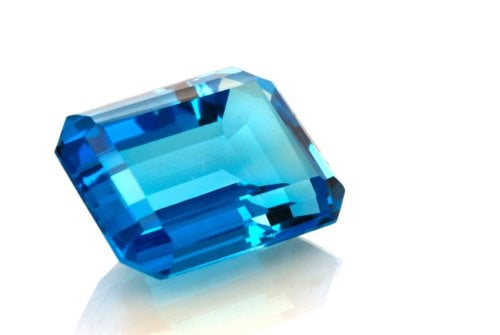
Brazil entered the aquamarine story in the 19th century when major deposits were discovered in Minas Gerais. Brazilian crystals remain the benchmark for quality, and most of the famous specimens you can see in museums today were cut from Brazilian rough.
Bloodstone: History and Lore
Bloodstone has two names and two stories. The Greeks called it heliotrope, “sun-turning,” because old sources reported that when the polished stone was set in water and held in the sun, the red flecks made the reflection look like blood on the surface. Pliny the Elder referenced the stone under that Greek name. The plainer name, bloodstone, took hold later in Europe.
The Christian legend behind the name is the one most readers know. As the story goes, at the Crucifixion drops of Christ’s blood fell onto a piece of dark green jasper at the foot of the cross, staining it permanently. From the Middle Ages onward, the stone was carried as a relic of the Passion and used in carved scenes of the Crucifixion itself.
Bloodstone’s protection lore reaches further back than that. Ancient Babylonians used bloodstone amulets, and medieval Crusaders carried small pieces into battle, believing the stone could stop bleeding from a wound. Whether or not it worked, the belief is consistent across centuries: bloodstone is the warrior’s gem.
Geology and Sources
Aquamarine is a variety of beryl, the same mineral family that gives us emerald (green), heliodor (yellow), and morganite (pink). Pure beryl is colorless. Aquamarine’s blue-green comes from trace iron in the crystal structure. Beryl rates 7.5 to 8 on the Mohs scale, which makes aquamarine hard enough for daily wear in rings, pendants, and earrings.
Shades range from seafoam green to palest blue. In the 1800s, green tones were the most fashionable. Today, sky-blue is the preferred color, and the more saturated the blue, the higher the price. There is also a quirk called pleochroism: depending on the angle, aquamarine can look green, blue, or nearly colorless from the same stone.
Modern aquamarine sources, in rough order of supply:
- Brazil (Minas Gerais), the long-standing benchmark
- Pakistan and Madagascar for fine modern material
- Colombia, with smaller production
- United States: Maine, New Hampshire, Connecticut, Pennsylvania, North Carolina, Georgia, Wyoming, Idaho, and Colorado all produce aquamarine
Bloodstone is a variety of chalcedony, a microcrystalline quartz. The dark green base is colored by chlorite or hornblende inclusions, and the famous red flecks are iron oxide. Bloodstone is softer than aquamarine, around 6.5 to 7 on the Mohs scale, but its toughness (resistance to chipping) is high, which is why it has been a favorite carving stone for signet rings and cameos.
Bloodstone sources include:
- India, especially the Deccan Traps in the Kathiawar Peninsula, the historic source
- Brazil, Australia, China, and Madagascar
- United States, with material from Oregon, California, and the Lake Superior region
March Birthstone Folklore and Healing Beliefs
Aquamarine collected a long list of attributed properties as it traveled through cultures. Some legends say that aquamarine:
- Symbolizes purity.
- Releases fear, calms nerves, and fosters mental clarity.
- Encourages tolerance and diffuses anger.
- Helps with decision making, perseverance, and responsibility.
- Protects pregnant women and babies from harm.
- Renders soldiers invincible in battle.
- Enhances personal revelations in meditation.
- Turns enemies into friends.
The ancient Greeks and Romans also believed aquamarine had medicinal powers to cure ailments in the stomach (especially seasickness) and the throat (aiding thyroid conditions and easing communication in difficult situations). In the Middle Ages, aquamarine was believed to purify any liquid it was dropped into, which made it popular among royals who worried about being poisoned.
Bloodstone’s traditional attributes lean toward strength, courage, and the body. It was carried to stop bleeding, to calm anger, to ward off the evil eye, and (in some medieval bestiaries) to make the wearer invisible. Modern crystal-healing communities still group bloodstone with the root chakra and the heart.
A measured note from the editor’s desk: these are folkloric claims, not medical ones. Gemstones do not treat illness, and a nice piece of aquamarine will not stop a poisoning. We pass the lore along because the lore is the point, not because the lore is a prescription.
Aquamarine, Bloodstone, and the Zodiac
March straddles two zodiac signs. Pisces runs from February 19 to March 20, and Aries picks up March 21 to April 19. The two birthstones map onto that split surprisingly well.
- Pisces (February 19 to March 20): Aquamarine, the water stone, fits the water sign. Calm, fluid, reflective.
- Aries (March 21 to April 19): Bloodstone, the warrior stone, fits the fire sign. Strength, drive, protection.
If you sit on the cusp, the easy answer is to wear both. For more on the Pisces and Aries overlap and the other folk traditions tied to this month, see our companion piece on March birth month symbols and fun facts.
How to Care for March Birthstones
Aquamarine is durable but not bulletproof. Warm soapy water and a soft brush will handle ordinary grime. Skip ultrasonic and steam cleaners if the stone has visible inclusions or has been fracture-filled, since heat and vibration can widen tiny cracks. Aquamarine can also fade with prolonged sun exposure, so do not leave a favorite piece on a sunny windowsill.
Bloodstone needs a gentler hand. The chalcedony base is porous compared to beryl, which means household chemicals (bleach, ammonia, harsh cleaners) can dull the polish. Clean it with warm water, a drop of mild soap, and a soft cloth. Store it away from harder stones so the surface does not get scratched.
For both stones, two habits go a long way: put jewelry on last (after lotion, perfume, and hairspray), and take it off first (before gardening, dishwashing, or the gym).
Famous March Birthstone Pieces
The largest cut aquamarine gem is called the Dom Pedro. It was cut from a crystal mined in Brazil in the 1980s that originally weighed about 100 pounds. German lapidary artist Bernd Munsteiner carved it into an obelisk-shaped 10,363-carat jewel, and it now lives at the Smithsonian National Museum of Natural History in Washington, D.C.

Before the Dom Pedro, the record for the largest aquamarine gem was held by the Roosevelt Aquamarine, 1,298 carats. It was a gift from the Brazilian president to First Lady Eleanor Roosevelt when Franklin D. Roosevelt visited Brazil in 1936. The massive, dark blue, rectangular stone was cut from a 3-pound piece of rough and now sits at the Franklin D. Roosevelt Presidential Library and Museum in Hyde Park, New York.
Aquamarine has a long association with European royalty too. Queen Elizabeth II famously wore a Brazilian aquamarine parure (necklace, earrings, bracelet, brooch, and tiara) that was a coronation gift from the people and government of Brazil in 1953. Bloodstone shows up in the same circles in a different form: carved as signet rings for popes, cardinals, and European nobility from the Renaissance onward, often engraved with a coat of arms or a Crucifixion scene.
Choosing March Birthstones
If you are buying for yourself or for someone born in March, here is the short version of what to look for.
Aquamarine. Color is the main price driver. Saturated sky-blue stones command the highest prices. Pale, near-colorless material is plentiful and affordable. Look for good clarity (eye-clean is standard for aquamarine), and ask whether the stone has been heat-treated to deepen the blue. Heat treatment is the industry norm and stable.
Bloodstone. A good bloodstone has a deep, even green base and a few well-placed red spots, not a muddy field of brown. It is most commonly cut as a cabochon or carved into a signet, since the pattern is the point and faceting would scatter it.
March Birthstone Anniversary Significance
Aquamarine is the traditional gemstone gift for the 19th wedding anniversary. It is sometimes used as a substitute stone in engagement rings as well, especially for couples drawn to a softer blue than a sapphire. The link back to medieval beliefs about reawakened love is part of why aquamarine ended up on the anniversary list in the first place.
Bloodstone is not on the standard anniversary chart, but it carries enough symbolism (endurance, protection, blood as kinship) that it shows up in modern gifts for fathers, soldiers, and long-running friendships.
If aquamarine is your March birthstone, you are lucky in the practical sense too: the gem is relatively affordable, widely available, and durable enough for daily wear. Bloodstone is even easier on the wallet and rewards a maker willing to cut a good cabochon. Consider one (or both) for your jewelry rotation, particularly if you have a beach trip or a cruise on the calendar this summer.
Curious about the months on either side? See February’s birthstone, amethyst, and April’s birthstone, diamond.

March Birthstone FAQ
What is the March birthstone?
March has two birthstones. Aquamarine is the primary, a sea-blue variety of beryl. Bloodstone, a dark green chalcedony flecked with red iron oxide, is the traditional second stone carried forward from older lists.
Why does March have two birthstones?
Older traditional birthstone lists (such as the one tied to the breastplate of the High Priest in Exodus) included bloodstone for March. When the modern list was standardized in 1912 by the National Association of Jewelers, aquamarine was added as a more readily available stone. Both have stayed on the list.
What does aquamarine symbolize?
Aquamarine’s name means “water of the sea.” It is traditionally associated with calm, courage, safe passage on the water, and (since medieval times) renewed love between married couples. It is the modern 19th-anniversary gemstone.
What does bloodstone symbolize?
Bloodstone is tied to strength, protection, and courage. Its Christian legend ties the red spots to drops of Christ’s blood at the Crucifixion, and medieval Crusaders carried it as a charm against bleeding wounds.
Is aquamarine an expensive stone?
Aquamarine is one of the more affordable transparent gemstones. Pale, light blue material is widely available at modest prices. Deep, saturated sky-blue stones (sometimes called “Santa Maria” blue, after a famous Brazilian mine) command much higher prices, especially in larger sizes.
Can I wear aquamarine every day?
Yes. At 7.5 to 8 on the Mohs hardness scale, aquamarine handles daily wear in rings and other jewelry. Avoid prolonged direct sun (it can fade) and skip ultrasonic or steam cleaning if the stone has visible inclusions.
How do I tell a real bloodstone from a fake?
Genuine bloodstone is opaque, with a dark green base and natural red or brown iron oxide flecks (never bright, even, painted-looking dots). It feels cool and heavy for its size. Reputable jewelers will identify the stone as bloodstone or heliotrope and disclose any treatments. If you are buying a significant piece, ask for a report from a recognized lab such as the Gemological Institute of America.
Does the March birthstone change by zodiac sign?
The calendar birthstone for March is aquamarine (with bloodstone as alternate), and that applies regardless of zodiac sign. By zodiac, Pisces (February 19 to March 20) is most often paired with aquamarine, and Aries (March 21 to April 19) with bloodstone, though zodiac birthstone lists vary by tradition.


Amber Kanuckel
Amber Kanuckel is a freelance writer from rural Ohio who loves all things outdoors. She specializes in home, garden, environmental, and green living topics.
- Amber Kanuckel

- Amber Kanuckel

- Amber Kanuckel
- Amber Kanuckel





I love the GemStone I a March Baby-03/17/1969.