

Geminid Meteor Shower 2026: Peak Date, Best Viewing, and What Makes It Different
Bundle up and head outside to watch the December Geminids, considered the best of the annual meteor displays. Learn more about this active meteor shower coming to a backyard sky near you!
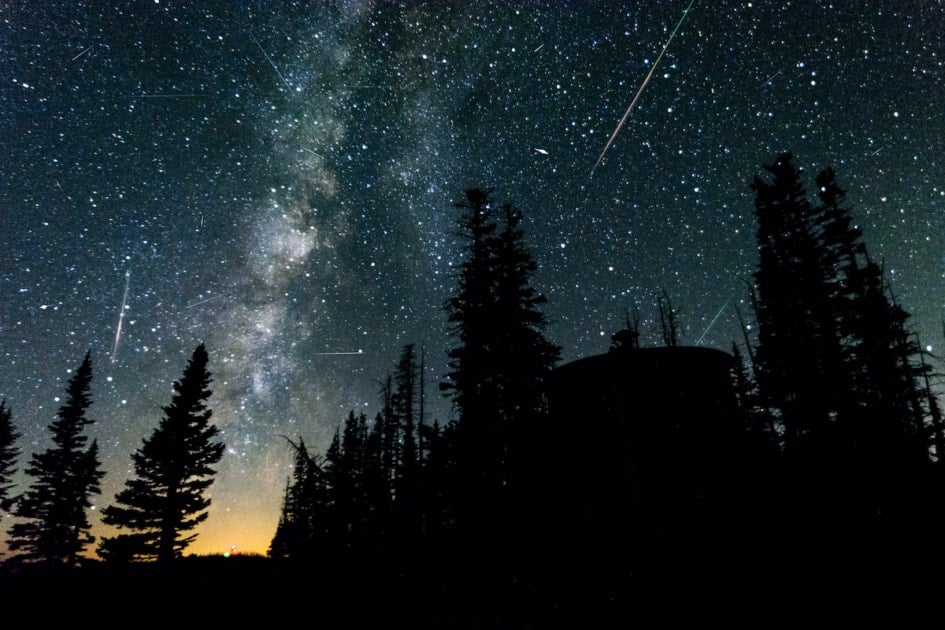
Quick Reference: Geminid Meteor Shower
- Peak 2026: the night of December 13-14, 2026.
- Active dates: December 4 to December 20.
- Rate at peak: 75 to 150 meteors per hour under dark skies.
- Radiant (where they appear to come from): the constellation Gemini, near the bright stars Castor and Pollux.
- Parent body: Asteroid 3200 Phaethon (the only major shower with an asteroid parent body, not a comet).
- Best viewing: after midnight, dark rural sky, no telescope needed.
The Geminid meteor shower is the strongest and most reliable meteor shower of the year, and the only major shower whose source is an asteroid instead of a comet. In 2026 the shower peaks the night of December 13-14, 2026, with active meteors visible December 4 to December 20. At its best you can expect about 75 to 150 meteors per hour from a dark rural site, and the meteors will all appear to streak away from the constellation Gemini, near the bright stars Castor and Pollux, the radiant point. Here is when to watch, where to look, and what makes the Geminid shower distinct.
What Causes the Geminid Meteor Shower?
Meteor showers happen when Earth passes through the dust trail left behind by a comet or asteroid as it orbits the sun. 3200 Phaethon was discovered in 1983 and is a 3-mile-wide rocky asteroid that comes closer to the sun than any other named asteroid. Solar heating cracks the surface and releases dust, which spreads along Phaethon’s orbit. Why an asteroid (and not a comet) sheds enough dust to support a major meteor shower remains an open question in planetary science.
When and Where to See the Geminid in 2026
The shower peaks the night of December 13-14, 2026. Activity is detectable from December 4 to December 20, but the few nights either side of peak give the highest rates.
- Best time: between 9 p.m. local time and dawn.
- Direction to look: generally toward the constellation Gemini, near the bright stars Castor and Pollux, but meteors can appear anywhere in the sky. Looking at a 45-degree angle from the radiant gives the longest streaks.
- Moon phase impact: The 2026 Geminids peak right after the Cold Moon (December 24 full moon). The waxing gibbous moon will wash out fainter meteors after moonrise, but the brightest Geminids will still be easy to see, and the peak rates are so high that even a moonlit night delivers a good show.
- Light pollution: drive at least 30 minutes from a city to roughly double the meteor count you will see.
- Tools: none. Binoculars and telescopes have too narrow a field of view; eyes do the best job.
What to Expect Visually
Geminids are slow by meteor-shower standards (22 miles per second, about half the speed of the Perseids), which makes them appear to drift across the sky in long arcs. Many are multicolored (yellow, green, orange) because Phaethon’s dust contains heavier elements than most comet debris. Geminid fireballs are common; this is the shower that most often produces meteors bright enough to cast shadows.
Geminid Folklore and Brief History
The Geminid shower is one of the youngest on the calendar. It was first observed in 1862, when astronomers reported a sparse new shower coming from the constellation Gemini. The rates have grown steadily ever since, as Earth has moved deeper into Phaethon’s dust stream with each orbital cycle. By the 2020s, the Geminids consistently outproduce the Perseids and are the strongest annual shower of the year.

Geminid Meteor Shower FAQ
When is the Geminid peak in 2026?
December 13-14, 2026, with high rates from about 9 p.m. through dawn. The shower is broad enough that activity stays useful for several nights either side.
Are Geminid meteors really from an asteroid?
Yes. Asteroid 3200 Phaethon is the source. It is the only major meteor shower with a confirmed asteroid parent body, which remains one of the unsolved puzzles of solar-system science.
How many will I see?
75 to 150 per hour under a dark rural sky at peak, which makes the Geminids the strongest annual shower. Suburban skies drop the rate to 25-50.
Why are some Geminids colored?
Phaethon’s dust contains heavier elements (calcium, sodium, magnesium) that burn with distinct colors. Yellow, green, orange, and even blue Geminids are common.
Is December a hard month to watch meteors?
Cold, yes. Dress for 30 minutes of stillness in below-freezing temperatures: insulated boots, hand warmers, a sleeping bag over a reclining chair. The reward is the best meteor shower of the year.
Will the December full moon spoil viewing?
The Cold Moon is December 24, 2026, after the peak. Around peak the moon is waxing gibbous and will be up most of the night, but the brightest Geminids still cut through moonlight.
For more stargazing, see Perseid Meteor Shower, Orionid Meteor Shower, Cold Moon (December Full Moon).


Joe Rao
Joe Rao is an esteemed astronomer who writes for Space.com, Sky & Telescope, and Natural History Magazine. Mr. Rao is a regular contributor to the Farmers' Almanacand serves as an associate lecturer for the Hayden Planetarium in New York City.
- Joe Rao

- Joe Rao
- Joe Rao
- Joe Rao



Where can you see him at what location in the United States?
I live in San Antonio. The forecast shows partly cloudy next weekend. Any idea the closest area to San Antonio, TX, to watch the Geminids without cloud obstruction?
Thank you