
Snow Moon 2026: Date, Folklore, and How to See It
Quick Reference
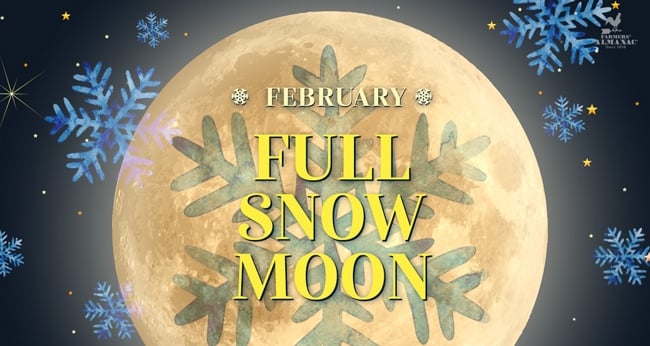
- Snow Moon 2026: Sunday, February 1, 2026
- Peak illumination: 5:09 p.m. Eastern Time (22:09 UTC)
- Rule: The Snow Moon is the first full Moon of February each year
- Best viewing: Saturday night, January 31, into Sunday evening, February 1
- Why “Snow”: February brings the heaviest snowfalls across much of the northern United States
- Other names: Hunger Moon, Storm Moon, Bone Moon, Eagle Moon, Ice Moon, Goose Moon, Black Bear Moon
The Snow Moon 2026 peaks on Sunday, February 1 at 5:09 p.m. Eastern Time. February is the shortest month on the calendar and, for much of North America, the snowiest. Deep drifts settle along the Ohio River Valley, the eastern Great Lakes, and the coastal Pacific Northwest, while the rest of the continent sits in the cold-locked stretch between the Wolf Moon and the Worm Moon. February’s full Moon carries a long list of names that reflect what people noticed most outside the door: heavy snow on the ground, frost on the branches, geese returning early, eagles riding cold air, and food running short.
When Is the Snow Moon 2026?
Full Moon February 2026: Sunday, February 1
Peak Illumination: 5:09 p.m. Eastern Time (22:09 UTC)
The rule is simple: the Snow Moon is the first full Moon of February each year. In 2026 that falls on Sunday, February 1. The Moon reaches full phase at the same instant everywhere on Earth, so the clock shifts only by time zone: 4:09 p.m. Central, 3:09 p.m. Mountain, and 2:09 p.m. Pacific. Peak falls during late afternoon across the eastern United States, which means the Moon will already be rising as full when it clears the horizon at dusk. The Moon looks full to the naked eye for about a day on either side of peak, so Saturday night, January 31, and Sunday night, February 1, both offer a worthwhile view.
Time-conscious readers can cross-check the timing on the U.S. Naval Observatory’s Moon Phases page, which lists every full Moon to the minute, and on NASA’s Moon Phases reference. For a one-page Almanac view of all 12 full Moons in 2026, see our Full Moon Calendar. Curious about the dark side of the cycle? Check when the next new Moon falls too.
Why It’s Called the Snow Moon
The name “Snow Moon” comes down to us from two overlapping traditions: Algonquian-speaking peoples of the northeastern woodlands and Colonial American settlers who borrowed and adapted those names. The reason behind it is plain. Across much of North America, February delivers the heaviest snowfalls of the year. This is especially true through the Ohio River Valley in the eastern and central United States, along the coastal Pacific Northwest, and into the Great Lakes, where a single storm can drop a foot or more. At this mid-winter point, with no plants to harvest and no new blooms in sight, snow becomes the most prominent feature on the landscape. Naming the Moon after it was a way of marking what mattered most.
Colonial American almanacs of the 18th and 19th centuries picked up these Algonquian names and pinned them into print, which is how “Snow Moon” became the dominant English-language label. The Mahican of the northeastern United States and Wisconsin sharpened the description to the “Deep Snow Moon.” The Oneida of upstate New York and the Great Lakes region call it the “Midwinter Moon,” which leaves the weather out and points squarely at the calendar.
In some Celtic histories, February’s full Moon is the “Ice Moon,” a name that fits any winter that ends in a glaze of freezing rain. In Maine, the Abenaki call it the “Makes Branches Fall In Pieces Moon,” which is exactly what ice does to oak limbs after a heavy storm. The Lakota of the northern plains have a close cousin: “When Trees Crack Because of Cold Moon.” If you have ever heard the rifle-shot pop of a frozen birch at twenty below, you know the sound the name is built around.
Where the climate softens, the names soften with it. The Comanche of the southern plains call February’s full Moon the “Sleet Moon,” a hint that real winter is loosening its grip. The Arapaho of the Great Plains use “Frost Sparkling in the Sun Moon,” where snowfall is lighter but cold still shows up as thick morning frost. Further south, the Catawba of South Carolina name it the “First Flower Moon,” a marker for the first crocus and snowdrop pushing through warming soil.
Other February Full Moon Names
“Snow Moon” is the most familiar name, but February’s full Moon carries more labels than almost any other month. Four stand out for how widely they traveled, and how plainly they describe a hard mid-winter month.
Hunger Moon
After several months of winter, February can be a month of low food supplies, with no new plants in the ground and animal stores running thin. The full Moon picks up that hunger plainly. The Cherokee of North Carolina call it the “Hunger Moon” or “Hungry Moon.” The Choctaw of the southeastern United States call it the “Moon of Big Famine.” The Kalapuya of the Pacific Northwest use “Out of Food Moon.” Names like these were never poetic flourishes; they were a practical record of how thin the pantry gets between Christmas and the first spring greens.
Storm Moon
Old English and Celtic almanacs name February’s full Moon the “Storm Moon” for the simple reason that February storms in Britain, Ireland, and the eastern Atlantic seaboard tend to be the year’s loudest. Nor’easters along the U.S. East Coast, lake-effect bands off Erie and Ontario, and Pacific atmospheric rivers all pile up under this Moon. The Storm Moon name carries through colonial-era almanacs and still appears in older European calendars next to “Ice Moon.”
Bone Moon (Cherokee)
The Cherokee also use a second name, the “Bone Moon” or “Bony Moon,” for the late-winter weight loss that hits hard when other food has run out and the bones in the smokehouse are all that’s left to gnaw on for marrow. The name is honest about what hunger does to a body. It also signals the moment when winter stores are at their lowest and the first wild greens are still weeks away.
Eagle Moon (Cree)
The Cree of the northern plains and boreal forest call February’s full Moon the “Eagle Moon,” because bald and golden eagles ride cold mid-winter thermals and return to traditional nesting territories early in the year. Where the Haida of Alaska see geese coming home, the Cree look up and see eagles. Both names point to the same hidden truth: the sky is the first part of the world to feel spring coming, long before the ground shows it.
Indigenous and European Names for February’s Full Moon
| Nation or Tradition | Region | Name for February’s Full Moon |
|---|---|---|
| Cherokee | North Carolina | Hunger Moon, Bone Moon |
| Choctaw | Southeast | Moon of Big Famine |
| Kalapuya | Pacific Northwest | Out of Food Moon |
| Cree | Northern Plains, Boreal Forest | Eagle Moon |
| Mahican | Northeast, Wisconsin | Deep Snow Moon |
| Oneida | Upstate New York, Great Lakes | Midwinter Moon |
| Abenaki | Maine | Makes Branches Fall In Pieces Moon |
| Lakota | Northern Plains | When Trees Crack Because of Cold Moon |
| Comanche | Southern Plains | Sleet Moon |
| Arapaho | Great Plains | Frost Sparkling in the Sun Moon |
| Catawba | South Carolina | First Flower Moon |
| Haida | Alaska | Goose Moon |
| Omaha | Central Plains | Moon When Geese Come Home |
| Tlingit | Pacific Northwest | Black Bear Moon |
| Ojibwe | Southern Canada, Northern Plains | When the Bear Cubs Are Born Moon |
| Celtic / Old English | Britain, Ireland | Ice Moon, Storm Moon |
Animals Under the February Full Moon
Many months reference animals in their full Moon names, such as January’s Wolf Moon or July’s Buck Moon. February is harder. Most animals are still hibernating, denned up, or pushed to the edge of their range. The few names that do reference animals point at the first stirrings of return, not high activity.
The Haida of Alaska call February’s full Moon the “Goose Moon” because geese begin moving back toward northern nesting grounds even before the snow begins to soften. The Omaha of the central plains use a parallel phrase, “Moon When Geese Come Home.” Both names reflect the same observation: long before spring shows up underfoot, the sky already knows.

The Tlingit of the Pacific Northwest call it the “Black Bear Moon,” because black bears begin to stir and move around their dens in February even before they truly emerge. The Ojibwe of southern Canada and the northern plains carry the same idea further: “When the Bear Cubs Are Born Moon,” marking the heart of the bear’s reproductive cycle inside the den. Both names speak to a season when life carries on out of sight, even when the surface of the woods looks empty.
February Sky Highlights
The Snow Moon rides through the richest patch of sky in the Northern Hemisphere. February evenings put the winter constellations directly overhead, so once the Moon clears the horizon, a step outside on a clear night opens up some of the most recognizable stars of the year. Even a bright full Moon does not wash these out; it just trims them down to the brightest few.
- Orion the Hunter: the easiest constellation to find. Look south after dark for three stars in a tight, even row, the famous Belt of Orion. From the Belt, follow the line up to red-tinted Betelgeuse and down to blue-white Rigel.
- Canis Major and Sirius: drop a line southeast from Orion’s Belt and the brightest star in the night sky, Sirius the Dog Star, blazes back. Sirius marks the nose of Canis Major, Orion’s hunting dog, and is so bright it often flickers through cold air with bursts of color.
- The Pleiades and Hyades: high to Orion’s upper right sits a small, misty knot of stars, the Pleiades, also called the Seven Sisters. Just below them, the V-shaped Hyades star cluster forms the face of Taurus the Bull, with the orange star Aldebaran as the bull’s eye.
Want a wider tour? Step outside about an hour after sunset, give your eyes ten minutes to adjust, and you can pick out all four landmarks without optics. Around the full Snow Moon, time your stargazing to the night before peak or the night after, when the Moon rises later and leaves a darker hour of true winter sky.
Snow Moon Folklore
Across centuries, the Snow Moon has carried a small library of folklore. Farmers watched it to predict the last hard frost. Hunters used its light to track game across snowfields. Some traditions hold that planting intentions or “moon water” set out under the February full Moon carries the steady, settled energy of mid-winter, a time for finishing what you started and not for new ventures. February is associated with the zodiac sign Aquarius for most of the month, shifting into Pisces near the end. Almanac readers exploring birth-month traditions can also see our notes on the February birth month symbols and the February birthstone.
A measured note. While direct scientific evidence supporting ritual outcomes is limited, the power of intention and ritual can be undeniable for the people who keep them. The Almanac’s job here is to record the tradition honestly, not to oversell it. If a Snow Moon ritual fits your year, keep it. If not, the Moon still does the same thing it has done for 4.5 billion years, with or without our help.
Gardening and Best Days Around the Snow Moon
In Gardening by the Moon tradition, the days running up to a full Moon favor planting above-ground crops, and the days after favor root crops as the Moon wanes. Few gardeners in the northern half of the country are putting seeds in the cold ground around February 1, but the Snow Moon week is a strong window for indoor seed-starting of slow growers: onions, leeks, celery, peppers, parsley, and early lettuces. South of the Gulf coast, gardeners can direct-sow peas, spinach, kale, and other cold-tolerant crops while the Moon is still waxing toward Sunday, February 1.
Best Days advice runs along the same grain. The Farmers’ Almanac Best Days Calendar lists February days that favor pruning fruit trees, setting eggs, transplanting indoor seedlings, and other quiet mid-winter tasks. The waning days right after the Snow Moon, February 2 through 4, are traditionally favored for cutting hay, clearing brush, and pruning to slow growth, all tasks that gardeners and small farmers used to time by the Moon long before frost dates were printed.
How to See the Snow Moon in 2026
The Snow Moon is one of the easier full Moons to catch. Peak falls late Sunday afternoon, February 1, so the Moon will rise in the east near sunset already at full phase, climb high in the southern sky through the evening, and set in the west near sunrise on Monday morning. No telescope, no binoculars, no app required. A clear sky and a low view of the horizon will do most of the work.
Best Viewing by Region
| Region | What to expect on February 1, 2026 |
|---|---|
| Northeast and Great Lakes | Cold, often clear air after a winter front. Look for a sharp, bright disc rising over snow and bare trees. |
| Southeast and Gulf | Milder evening temperatures, higher cloud risk. Check the forecast a day ahead and plan for a clear window. |
| Mountain West and Plains | Dry air and open horizons give some of the best Snow Moon views in the country. Stars stay crisp on either side of the disc. |
| Pacific Northwest | Frequent cloud cover and coastal storms. Aim for a high-pressure window on either side of February 1. |
| Canadian Prairies and North | Long winter nights mean the Moon rides high for hours. Bundle up, look east after dinner, and stay out for the rise. |
Practical Tips
- Step outside about 20 minutes before sunset on Sunday, February 1, to catch moonrise low in the east.
- Let your eyes adjust for 5 to 10 minutes. The contrast between a bright full Moon and dark snow is striking once you settle in.
- For photography, a phone in night mode handles the wide scene. A DSLR at 1/125 second, f/8, ISO 200 will hold detail on the disc.
- The Moon looks largest near the horizon, an optical illusion that has fooled people for centuries. Catch it then for the most dramatic photo.
- Check local moonrise and moonset for your zip code in our Moon Phases Calendar before heading out.
No Full Moon at All?
One unusual feature of February’s Moon phases is that the month sometimes carries no full Moon at all. The lunar phase cycle runs 29.5 days. When a full Moon falls at the very end of January, the next full Moon arrives a day or two after February ends. That absence is often called the “Black Moon,” and it keeps the naming cycle in step with the other 11 months.
The disappearance of February’s full Moon happens roughly every 19 years. The most recent example was 2018. The next February without a full Moon will be in 2037, followed by 2075 and 2094. Mark the calendar, or not. The month still moves on, and so does the Moon.
The year 2048 will be a very rare February full Moon occurrence indeed. The full Moon will fall on Leap Day, February 29. The timing of one extra day every four years coincides so seldom with the lunar phase cycle that there will be only four Leap Day full Moons in this entire millennium, with 2048 being the first. The other three Leap Day February full Moons will follow in 2132, 2216, and 2376.
February is a unique Moon month indeed, not only for the naming of its full Moon, but for the months when there is no full Moon at all, or the once-in-a-lifetime occasions when we can all leap for joy at the Leap Day full Moon.


Snow Moon 2026 FAQ
When is the Snow Moon in 2026?
The Snow Moon 2026 peaks on Sunday, February 1, 2026, at 5:09 p.m. Eastern Time. It looks full to the naked eye for about a day on either side of peak, so Saturday night, January 31, and Sunday night, February 1, both offer good viewing.
Why is the February full Moon called the Snow Moon?
February brings the heaviest snowfalls across much of North America, especially through the Ohio River Valley and the coastal Pacific Northwest. The name comes from Algonquian-speaking nations of the northeastern woodlands and was carried into Colonial American almanacs in the 18th and 19th centuries. With no plants to harvest and no new blooms in sight, snow becomes the most prominent feature on the winter landscape.
What are other names for the February full Moon?
The Cherokee call it the Hunger Moon and Bone Moon, the Cree call it the Eagle Moon, the Choctaw call it the Moon of Big Famine, the Kalapuya call it the Out of Food Moon, the Mahican call it the Deep Snow Moon, the Oneida call it the Midwinter Moon, the Abenaki call it the Makes Branches Fall In Pieces Moon, the Lakota call it When Trees Crack Because of Cold Moon, the Comanche call it the Sleet Moon, the Arapaho call it Frost Sparkling in the Sun Moon, the Catawba call it the First Flower Moon, the Haida call it the Goose Moon, the Omaha call it Moon When Geese Come Home, the Tlingit call it the Black Bear Moon, and the Ojibwe call it When the Bear Cubs Are Born Moon. Older European calendars list it as the Ice Moon and the Storm Moon.
What stars and constellations are best with the February full Moon?
February evenings carry the brightest constellations of the year. Orion, with its three-star belt, sits due south after dark. Sirius, the brightest star in the sky, blazes southeast of Orion as the nose of Canis Major. High overhead, the Pleiades star cluster and the V-shaped Hyades form the face of Taurus the Bull. All four are visible without a telescope, even with a bright Snow Moon up.
What is a Black Moon in February?
A Black Moon is February’s name for the months when no full Moon falls inside the calendar. Because the lunar phase cycle runs 29.5 days, a full Moon at the very end of January pushes the next full Moon into early March, leaving February without one. The next Black Moon February will be 2037, followed by 2075 and 2094.
When was the last time February had no full Moon?
The most recent February without a full Moon was 2018. The pattern repeats roughly every 19 years, which is why the next occurrence is 2037. The other Black Moon Februaries in the current century will fall in 2075 and 2094.
When is the next Leap Day full Moon?
The next Leap Day full Moon will fall on February 29, 2048. The Leap Day full Moon is extraordinarily rare; the lunar phase cycle and the four-year leap pattern line up so seldom that only four Leap Day full Moons will occur this millennium. After 2048, the others will fall in 2132, 2216, and 2376.
Do I need a telescope to see the Snow Moon?
No. The Snow Moon is easily visible to the naked eye. Step outside near moonrise on Sunday, February 1, 2026, look east, and the Moon will rise already at full phase since peak illumination falls at 5:09 p.m. Eastern Time. A clear sky and a low horizon are all you need.
Join The Discussion
What is your favorite name for February’s full Moon?
If you could rename the Snow Moon, what would you call it?
Related Articles
- March Worm Moon And Alternative Names
- Full Moon Names And Times
- Moon Phases Calendar
- January Full Wolf Moon
- February Birth Month Symbols
- February Birthstone
- When Is the Next New Moon?
- Subscribe To The Farmhouse, Our Members-only Community!


Melissa Mayntz
Melissa Mayntz is a writer who specializes in birds and birding, though her work spans a wide range—from folklore to healthy living. Her first book, Migration: Exploring the Remarkable Journeys of Birds was published in 2020. Mayntz also writes for National Wildlife Magazine and The Spruce. Find her at MelissaMayntz.com.
- Melissa Mayntz

- Melissa Mayntz
- Melissa Mayntz
- Melissa Mayntz





What a wonderful post–fascinating!
Hi Regina! Glad to hear you liked reading this article. There is always something new to learn about the Moon! Best wishes from all of us at FA.
I love all the Cherokee Full Moon names especially but learning a lot of other Native American’s titles of full moons is so interesting. Learning about the leap year full moon is very interesting.
knowledge each day starts my day , enjoying these
We are very happy to hear you are enjoying this content. We appreciate having you here in our community!
Hi Carmen Diaz, no, no relation! Thanks for your note!
Thank U Almanac… for bringing these amazing attractions that endure forever in our minds & visions that we can see & feel closely to without being out there on the view !!!.. So wonderful…*****
I love my Farmer’s Almanac. Give me many hours of useful information.
Susan Higgins, daughter of David and Vera? Moon’ faces are peculiar characters. They can describe many things. Indians still follow the moon to personalize their instincts. Abundant Life and Prosperity can depend from a moon reading. No joke!
I live here in Abbeville,SC a place where there is very little snow,sleet,freezing rain or any other precipitation other than rain.When we see a snow flake around here we head to the grocery stores and buy all the bread and milk there is!
For the most part we really have great weather but the school children would really like to have a few or at least one “snow day”!!!
Native Americans really had a close affiliation with the moon and its phases. I enjoy these reports each month on the names given to the full moon for that month by various Indian tribes.
Hi Valerie, Check out our winter forecast here (and the weather map with your zone). You can also keep track of what we’re forecasting here (which is the same information that’s in your 2016 Almanac): https://www.farmersalmanac.com/long-range-weather-forecastsouth-central-us/