

Winter Bird Bath Ideas: Keep Water From Freezing
Here are 6 easy winter bird bath ideas to keep a fresh supply of water for your feathered friends when the mercury plummets.
Quick Reference: Winter Bird Bath Ideas That Beat the Freeze
- Why it matters: birds burn precious energy melting snow, so open water is a winter lifeline.
- Quick, no-cost fixes: move the bath to a sunny, sheltered spot and drop dark rocks in the basin.
- Best long-term fix: an outdoor-rated immersion heater or a fully heated bird bath.
- Keep it full: a small amount of water freezes faster, and heaters can fail in a near-empty basin.
- Never do this: no salt, no antifreeze, no boiling water, and no indoor space heaters nearby.
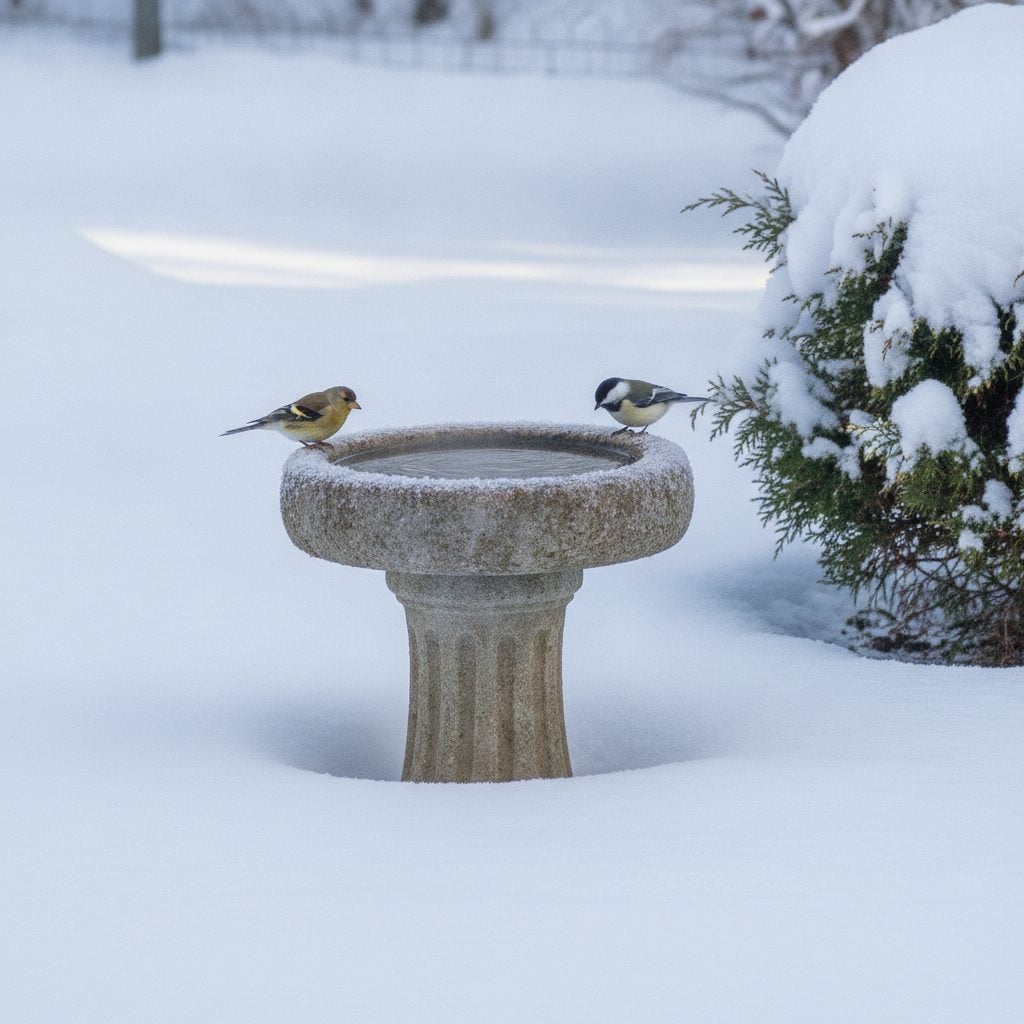
When the mercury plummets during a January cold snap, the songbirds in your yard face the same trouble you do at the frozen garden spigot: the water has turned to ice. Birds need to drink and bathe every day of the year, winter included, and an open bird bath can be a lifeline once ponds, puddles, and gutters lock up. Here are six easy winter bird bath ideas to keep a fresh supply of water flowing for your feathered friends through the coldest weeks of the year.
Why Birds Need Your Help in Winter
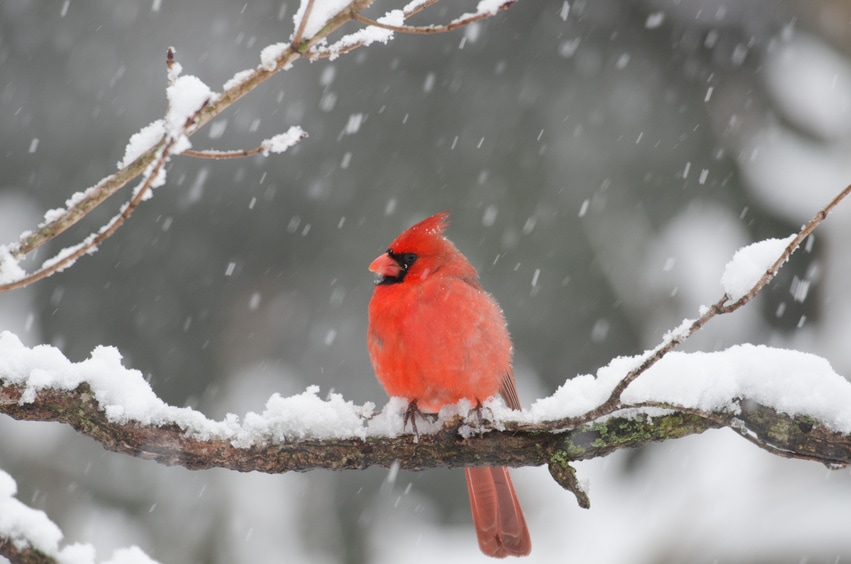
Birds can eat snow to get by, but melting it in their bodies burns energy they would rather spend hunting for scarce winter food. Worse, drinking partially melted water can lower a bird’s body temperature, leaving it sluggish and more open to predators, sudden cold snaps, and other dangers. Keep your bird bath from freezing and the birds will happily line up at this easy water source, rewarding you with a steady parade of feathered guests all winter long.
How Cold Does It Have to Be for a Bird Bath to Freeze?
Water turns to ice at 32 degrees Fahrenheit, which is 0 degrees Celsius, but a bird bath rarely freezes at exactly that mark. A shallow basin with only an inch or two of water skins over far faster than a deep one, and wind pulls heat away quickly. On a still, sunny afternoon a bath can stay liquid even when the air sits a few degrees below freezing. Once the overnight low drops into the teens, though, an unprotected basin can ice over within the hour.
That is why the fixes below stack. A single trick may carry a mild frost, while a hard, still, single-digit night calls for a heater and a full basin working together. Prepare your bath for chilly nights as early in the season as possible, before the first deep freeze catches you off guard.

6 Easy Tips to Keep Your Bird Bath From Freezing
There are several simple steps you can take to keep a bird bath from freezing. How many you need, and how well they work, depends on how bitter the cold gets and how long the cold snaps last. Every bit of open water helps, so start early and add methods as the season turns colder.
- Position for Warmth. Move the bath into a sunny spot where it can soak up solar heat and stay liquid longer. Set it near a windbreak, such as a fence, hedge, or the wall of the house, for added protection from the wind that steals warmth.
- Darken the Surface. Dark surfaces absorb heat more efficiently than light ones. Adding a few black river rocks, a black plate, or a sheet of black plastic to the bottom of the basin helps the water take in the sun’s warmth and stay liquid a little longer.
- Add an Icebreaker. Breaking up the thin films of ice that form on the surface helps keep the whole bath open. Float a small ball in the basin and the wind will nudge it across the surface to break the ice. A dark ball does double duty, acting as a small heat absorber for a little extra anti-freezing power.
- Turn on the Heat. An outdoor-rated immersion heater, sometimes called a de-icer, keeps the water just warm enough to stop it from freezing. These heaters need a nearby outlet or an outdoor extension cord, but they are energy-efficient and simple to use. Check with your local garden center or an online retailer for options.
- Invest in a Spa. Give backyard birds a real treat with a fully heated winter birdbath. These baths have a heater built right into the basin and stay almost completely liquid as the temperature drops, so birds always find water to drink.
- Keep It Full. Whatever method you use, keep the basin topped off. A small amount of water freezes far more quickly, and heaters can malfunction if there is not enough water in the bath to cover them. A quick daily top-off goes a long way.
Choosing a Bird Bath Heater or De-Icer
If a plug-in fix makes sense for your yard, you have two paths. A drop-in de-icer sits in the bath you already own, while a heated bird bath has the heating element built into the basin. Either way, a few features are worth looking for before you buy.
- Look for a thermostat. The best units switch on only when the water nears freezing and shut off once it warms, so they sip electricity instead of running all day. They warm the water just enough to keep it open, not to make it steam.
- Keep it shallow. Small songbirds want to stand and sip, not swim. Two to three inches of water in the deepest part is plenty, and a gentle slope lets chickadees and finches wade in at the edge.
- Mind the cord. Use only outdoor-rated heaters and an outdoor-rated extension cord, and route it where you will not trip on it or nick it with a shovel.
What NOT to Do!
It can be tempting to take drastic measures to keep a bird bath open, but always put safety first, both for yourself and for the birds, when providing winter water.
- Do not add salt, antifreeze, glycerin, or any other chemical to the water. These are highly toxic and poisonous to birds, even in small amounts.
- If the bath does freeze, do not use boiling water or sharp blows to break or melt the ice, since these dramatic gestures can crack and damage the bath.
- Never set a space heater or other indoor heater nearby to warm the bath, either. These appliances are not rated for outdoor use, and there is a real risk of short circuits and fires.
With just a few simple steps, you can keep your bird bath flowing freely even in the chilliest weather, and you will be amazed at how many birds stop in for an easy drink on cold, snowy days.
Need tips for feeding birds during the winter months? Try these!
Which Birds Come to Water in Winter
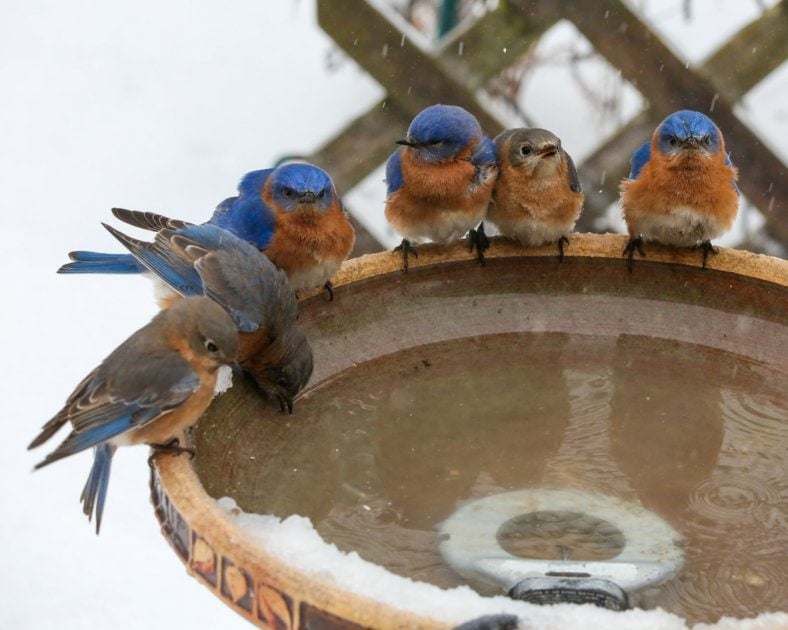
An open bath in a snowy yard draws a lively crowd. Chickadees, dark-eyed juncos, nuthatches, cardinals, house finches, goldfinches, and woodpeckers all visit for a drink, and in much of the country you may see Eastern bluebirds gather at a heated basin on a bright, cold day. Which species show up depends on your region and the cover nearby, so set the bath within a short flit of a shrub or evergreen where birds can perch and preen. The National Wildlife Federation notes that a reliable water source is one of the four things every backyard needs to earn certification as a wildlife habitat, right alongside food, cover, and places to raise young.
Watching the long-range forecast for the next hard freeze gives you a day or two to top off the basin and check the heater before the cold arrives. A little planning keeps the water open and the yard busy.
Related:
5 Fascinating Facts About Migrating Birds

Winter Bird Bath Ideas: Frequently Asked Questions
How do I keep a bird bath from freezing without electricity?
Move the bath to a sunny, wind-sheltered spot and set a few black river rocks or a black plate in the basin to soak up the sun’s heat. Float a small ball on the surface so the wind keeps a patch open, and top the bath off each morning, adding a splash of warm water to buy a few more hours of open water.
Will a floating ball really keep a bird bath from freezing?
It helps on milder days. As the wind blows a small ball across the surface, it breaks up the thin films of ice before they can join into a solid sheet. A dark ball works a little better because it also absorbs heat. On a hard, still, single-digit night, though, you will need a heater as well.
Is it safe to put a heater in a bird bath?
Yes, as long as you use an outdoor-rated immersion heater or a bath with a built-in heater, plugged into an outdoor-rated extension cord. Look for a thermostat so the unit runs only when the water nears freezing. Never use an indoor space heater near the bath, since it is not rated for outdoor use and can cause short circuits or fires.
Can I add anything to the water to stop it from freezing?
No. Never add salt, antifreeze, glycerin, or any other chemical to a bird bath. These are toxic to birds, and salt can also foul feathers and dehydrate them. The only safe way to keep water open is with heat, a sunny spot, or a fresh daily refill.
How deep should a winter bird bath be?
Shallow. Two to three inches of water in the deepest part is plenty for small songbirds, and a gentle slope lets them wade in at the edge to sip and bathe. A shallow basin also stays open more easily when a heater is doing the work, as long as you keep it full.
Do birds really drink from bird baths in winter?
They do, and open water can be even more valuable in winter than in summer, since so many natural sources are frozen. Chickadees, juncos, nuthatches, cardinals, finches, and woodpeckers all visit a reliable bath for drinking and bathing, which keeps their feathers in good insulating shape against the cold.


Melissa Mayntz
Melissa Mayntz is a writer who specializes in birds and birding, though her work spans a wide range—from folklore to healthy living. Her first book, Migration: Exploring the Remarkable Journeys of Birds was published in 2020. Mayntz also writes for National Wildlife Magazine and The Spruce. Find her at MelissaMayntz.com.
- Melissa Mayntz

- Melissa Mayntz
- Melissa Mayntz
- Melissa Mayntz





why aren’t there solar bird baths? it doesn’t seem like it would be rocket science, but I can’t find one anywhere!!
I’ve had a concrete bird bath for years. I live in the Southeast but when the water freezes, I have always poured hot water into the bird bath without EVER having a problem. The hot water is quickly cooled and unless it’s in the single digits (which it rarely is here) the water remains liquid, at least long enough for the birds to drink. I can see if your bath is made of some other material introducing hot water possibly could damage it, but I’ve never once experienced a problem. JMO
Heated dog bowl-$20. Has a thermostat for efficiency.
Thanks! This is my first year having a birdbath for my neighborhood birds and am surprised at how much they use it. I was wondering what to do about our freezing winters and this article was very helpful.
I build a diy heater for my bird water using a empty gallon paint can, a light bulb and some water pipe insulation. Put small hole in side of paint can to allow for the extension cord, put a light bulb socket in side can with a 40 watt old fashion light bulb. 2” of pipe insulation then the lightbulb then fill the rest of the can with the pipe insulation loosely, Put lid on Paint can, Turn that can lid size down and used gorilla tape to secure the can from the wind and plug in to a outdoor time( which I had laying around) light bulb turns on 1hour BEFORE sunrise and shuts of a sunset. Total cost was under ten dollars, light bulb and paint can and outdoor extension cord I had on hand. All I paid for was the light bulb socket, gorilla tape and insulation. I put my plastic water(about 3” deep) container on top of paint can and so far the water has stayed liquid. We will see how well it works when we get below zero weather for weeks on end, I let you know.
I use a small 3ft. Diameter satellite dish for my annual bird waterer Is it safe to put an electric heating tape in the dish to keep water unfrozen.
Doesn’t the cord for bird bath heaters look like a snake to the birds? Won’t it scare them away?
For a winter bird bath I use a metal pan about 16″ x 12″ x 2″ deep. I support it on a small “wood frame of 1x 4’s leaving the middle of the bottom of the pan exposed where I attach a magnetic Auto engine block heater (about 2″ x 4” ) and using an extension cord I plug it in whenever the temp will be below freezing. I bought the engine block heater online.
Good luck
I live in So. Indiana and we get some pretty cold weather and often snow. I keep two metal trays on the rail of my porch filled with birdseed. I have a large dog dish that plugs in to keep it from freezing. Do you think this would suffice for bird water?