

Lion’s Gate Portal: Meaning, Dates, and the 8/8 Astronomy
Lion’s Gate Portal: Quick Reference
- What it is: A modern spiritual tradition tied to the bright star Sirius and the number 8/8
- Peak date: August 8 (8/8), during Leo season
- The window: Roughly July 28 to August 12
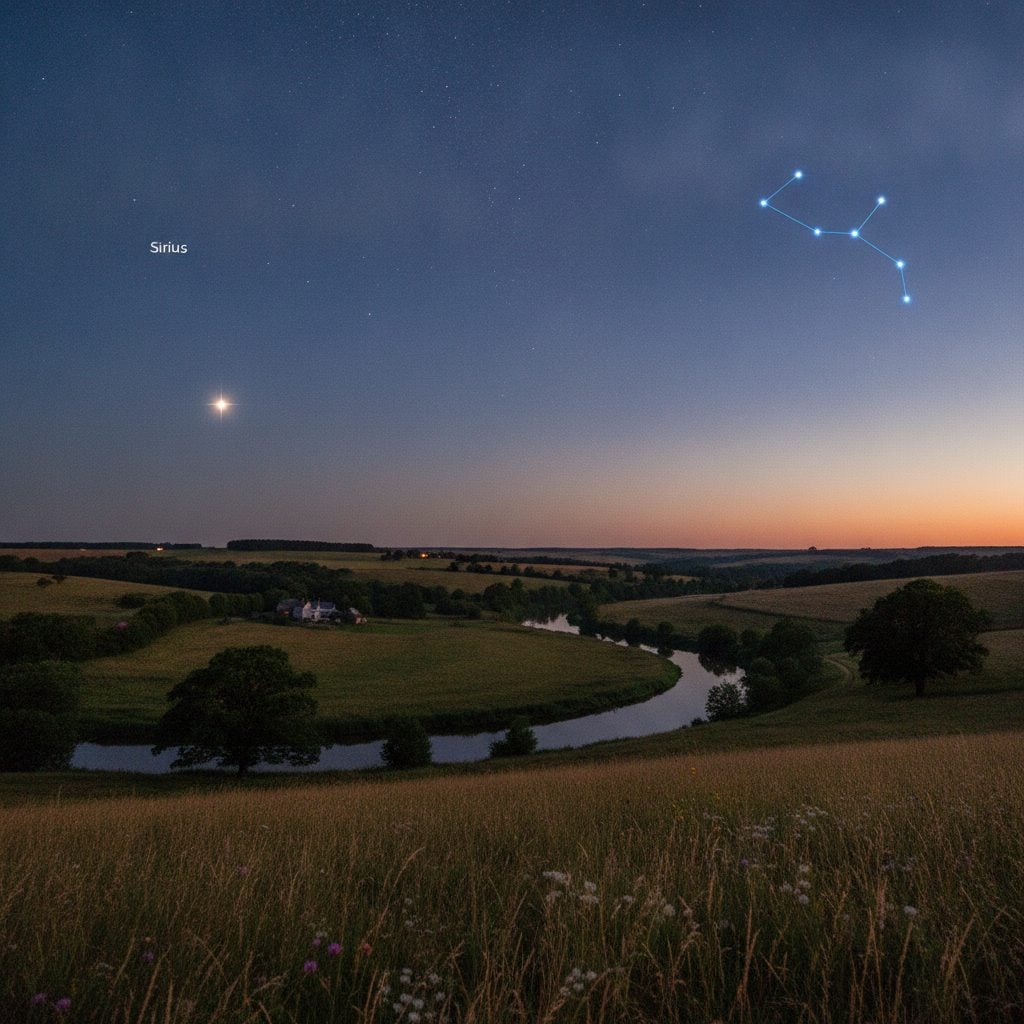
- The astronomy: Sirius, the brightest star in the night sky, begins rising near the Sun in late summer
- The honest part: The star is real; the “portal” of amplified energy is belief and ritual, not science
Every August, talk of the Lion’s Gate Portal lights up social feeds with promises of luck and fresh starts. Western astrology tracks the Sun through the twelve zodiac signs from Aries to Pisces, but the sky holds many other stars that traditions have long read for meaning. Chief among them is Sirius, the brightest star besides the Sun, long tied to courage and luck. When it lines up with the Sun, Orion, and Earth, believers say its power is amplified, a moment they call the Lion’s Gate Portal. Here is the astronomy behind it, the numerology, an honest look at whether it is real, and ten down-to-earth ways to use the time.
What Is the Lion’s Gate Portal?
According to Western astrology, Leo season runs from July 23 to August 22 each year. On August 8 (8/8), the Sun, Sirius, Orion, and Earth are said to line up. The Lion’s Gate Portal refers to the days on either side of that date, roughly July 28 to August 12, when the power of Sirius is believed to be activated by the Sun. The peak lands on the 8th day of the 8th month, which is a big part of the appeal.
There is real astronomy under the tradition. To the ancient Egyptians, Sirius was the goddess Sopdet, and its first reappearance in the dawn sky each year signaled the annual rising and flooding of the Nile that their survival depended on. Later, the Greeks and Romans called Sirius “the Dog Star” and noticed it climbing alongside the Sun in late July. They blamed the pair for the hottest stretch of the year, the Dog Days of Summer. One thing worth keeping straight: the Dog Days and the Lion’s Gate Portal are not the same thing, even though both center on Sirius and overlap on the calendar. The Dog Days come from ancient astronomy and folklore, while the Lion’s Gate Portal is a much more recent spiritual tradition built on similar roots.
Beyond its brightness, old-world astrologers thought Sirius carried the qualities of two fiery planets, Jupiter and Mars. In astrology, Jupiter stands for luck, expansion, and growth, the bringer of prosperity, fortune, and wisdom. Mars stands for action, drive, passion, and energy. Put those together and Sirius earned a reputation as an especially fortunate star. That is the thinking behind the tradition: act while Sirius is aligned, the story goes, and your efforts carry the luck of Jupiter and the courage of Mars. According to EarthSky, the star’s late-summer return near the Sun is a genuine, predictable event, even if the meaning people attach to it is a matter of belief.

What the Numerology Says About 8/8
Numerology and astrology are different practices, but some readers blend them, and the Lion’s Gate Portal is where they meet. Leo season falls mostly in the eighth month, August, and the tradition peaks on the 8th day of that month, so two eights stack up on 8/8. In numerology, that doubling is read as a boost to the lucky, abundant energy of the moment. There is also a visual nod that people love: turn an 8 on its side and you get the symbol for infinity, the endless loop we tend to associate with lasting growth. None of this is math you can test, but as a memory hook and a reason to pause and set an intention, the symbolism does its job.
Is the Lion’s Gate Portal Real?
Here is the straight answer. The astronomy is real: Sirius truly is the brightest star in the night sky, and its heliacal rising, the morning it first reappears near the Sun in late summer, is a fixed, predictable event that astronomers and ancient cultures alike have tracked for thousands of years, as Encyclopaedia Britannica notes. What is not science is the idea that this alignment opens a “portal” that pours extra luck or energy into your life. That part is modern spiritual tradition, not measurable fact, and we will not pretend otherwise. Our take is the same one we bring to any folklore: there is no harm, and often real good, in using a date on the calendar as a nudge to reflect, set a goal, and take a step toward it. Treat the Lion’s Gate Portal as a prompt, not a promise, and keep whatever helps you.
10 Ways to Make the Most of the Lion’s Gate Portal
Because the Lion’s Gate Portal is treated as a lucky, high-energy window, here are ten practical ways to channel it toward real goals. Every one of these is worth doing on any day of the year, so think of August 8 as a handy reminder to begin.
1) Create a Vision Board
What would you like your life to look like a year from now? Gather images and words that feel empowering and capture the life you are working to build, then put them somewhere you will see them daily.

2) Have Meaningful Conversations
Sit down for the heart-to-heart talks you keep putting off, with a partner, family member, or friend. Name what you would like to change, and speak honestly about how you can build it together.
3) Make an Action Plan
Create or revisit your professional goals, and break them into something you can do each month. You can even line your plans up with the phases of the Moon, an old planning habit we walk through in our guide to aligning goals with the Moon.
4) Review Your Finances
Take an honest look at your money. Start a savings plan, set up an investment, or build a budget that trims the expenses you will not miss.
5) Improve Your Health
Check in on your physical health, diet, and fitness. A visit with a doctor, specialist, or trainer can give you a clear, realistic plan for the year ahead.
6) Get Creative
Make room for creativity. Let yourself be inspired, return to an artistic project, or pick up new supplies and try something you have never done before.
7) Keep Learning
Pick up a new skill or dig into a subject you have been curious about. It is a fine time to sign up for a class or a course.
8) Book a Trip
Plan some travel, now or later in the year. A change of scenery has a way of widening your view of what is possible.
9) Explore Your Spirituality
Read up on a spiritual practice or a culture new to you. It can deepen your sense of place in the world and help you live a little more fully.
10) Reflect on Your Roots
As you reach for a new future, look back with gratitude at how far you have come and at the struggles your family overcame to get you here. Honor that history, set down what no longer serves you, and move forward.
Related reading: Full Moon rituals for personal growth, 8 ways to celebrate the Harvest Moon, and the Best Days Calendar.


Lion’s Gate Portal FAQ
What is the Lion’s Gate Portal?
It is a modern spiritual tradition tied to the bright star Sirius and the date 8/8. Believers hold that when Sirius aligns with the Sun during Leo season, it opens a window of luck and energy for setting intentions and pursuing goals.
When is the Lion’s Gate Portal?
It peaks on August 8 (8/8) each year, with a surrounding window of roughly July 28 to August 12. It always falls during Leo season, which runs from July 23 to August 22.
Is the Lion’s Gate Portal real or backed by science?
The astronomy is real: Sirius is the brightest star in the night sky, and its late-summer rising near the Sun is a predictable event. The idea that this opens a “portal” of extra energy is spiritual belief, not science. Treat it as a prompt to reflect and act, not a guaranteed outcome.
Why is the number 8/8 important to the Lion’s Gate Portal?
Leo season falls mostly in August, the eighth month, and the tradition peaks on the eighth day, so two eights line up on 8/8. In numerology that doubling is read as added luck, and an 8 on its side also forms the symbol of infinity.
Is the Lion’s Gate Portal the same as the Dog Days of Summer?
No. Both center on Sirius and overlap on the calendar, but the Dog Days come from ancient astronomy and folklore about the hottest stretch of summer, while the Lion’s Gate Portal is a much more recent spiritual tradition.
What should you do during the Lion’s Gate Portal?
Use it as a reset. Make a vision board, set financial or health goals, plan travel, learn something new, or simply reflect with gratitude. The date is a useful reminder; the real work is the steady follow-through afterward.
Join the Discussion
What personal goal or project are you working on during this Lion’s Gate Portal? Share it in the comments below.


Kyle Thomas
Kyle Thomas is an expert astrologer who writes for The New York Post, Cosmopolitan Magazine, Marie Claire, Elite Daily, Bustle,and more. He has been featured on Access Hollywood, E! Entertainment, NBC and ABC television. Kyle is globally recognized as a "celebrity astrologer" for his guidance of well known actors in Hollywood and prominent business executives, but he also loves sharing his comic insights with everyday people. His work explains how astrology influences lifestyle and trends worldwide. Learn more about him at KyleThomasAstrology.com.
- Kyle Thomas

- Kyle Thomas
- Kyle Thomas
- Kyle Thomas





January: Named after Janus, the Roman god of beginnings, endings, doors, and gateways
March: Named after Martius, the Roman god of war, and the name of the first month in the original Roman calendar
April: Named after Aphrodite, the goddess born from the sea’s foam
May: Named after Maia, the nymph associated with the earth
August: Originally called Sextilis, the sixth month in ancient times, it was later renamed after Augustus, the nephew of Julius Caesar, which means “respected and impressive”
February: Comes from Februarius, a month in the ancient Roman calendar, and is named after the Roman festival of purification, Februalia
July: Originally called Quintilis, the fifth month of the Roman calendar before 500 B.C.E., it was renamed after Julius Caesar, who was born in July
September: Comes from the Latin word septem, which means “seven”
October: Comes from the Latin word octo, which means “eight”
November: Comes from the Latin word novem, which means “nine”
December: Comes from the Latin word decem, which means “ten”