

Keep Deer Out of Your Garden: Surefire Ways That Work
White-tailed deer are beautiful, but destructive. Keep them from turning your garden into a salad bar!
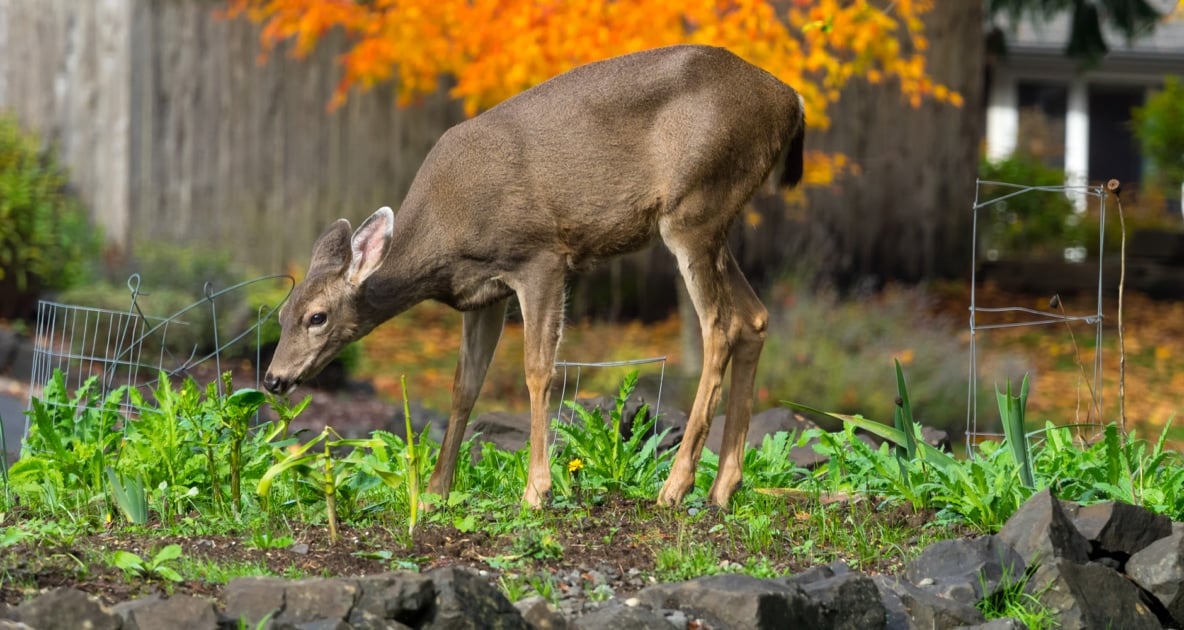
Quick Reference: How to Keep Deer Out of Your Garden
- Best all-around fix: a deer fence at least eight feet high, since white-tailed deer can clear six to seven feet on a full run.
- Protect single beds: shorter chicken wire around individual bushes and islands does the job.
- Repellents: commercial and homemade sprays work, but reapply after every rain or heavy dew.
- Plant smart: deer tend to pass by columbine, coneflower, sea holly, lavender, foxglove, and other unpalatable plants.
- The golden rule: combine methods. Deer are persistent, so no single tactic holds forever.
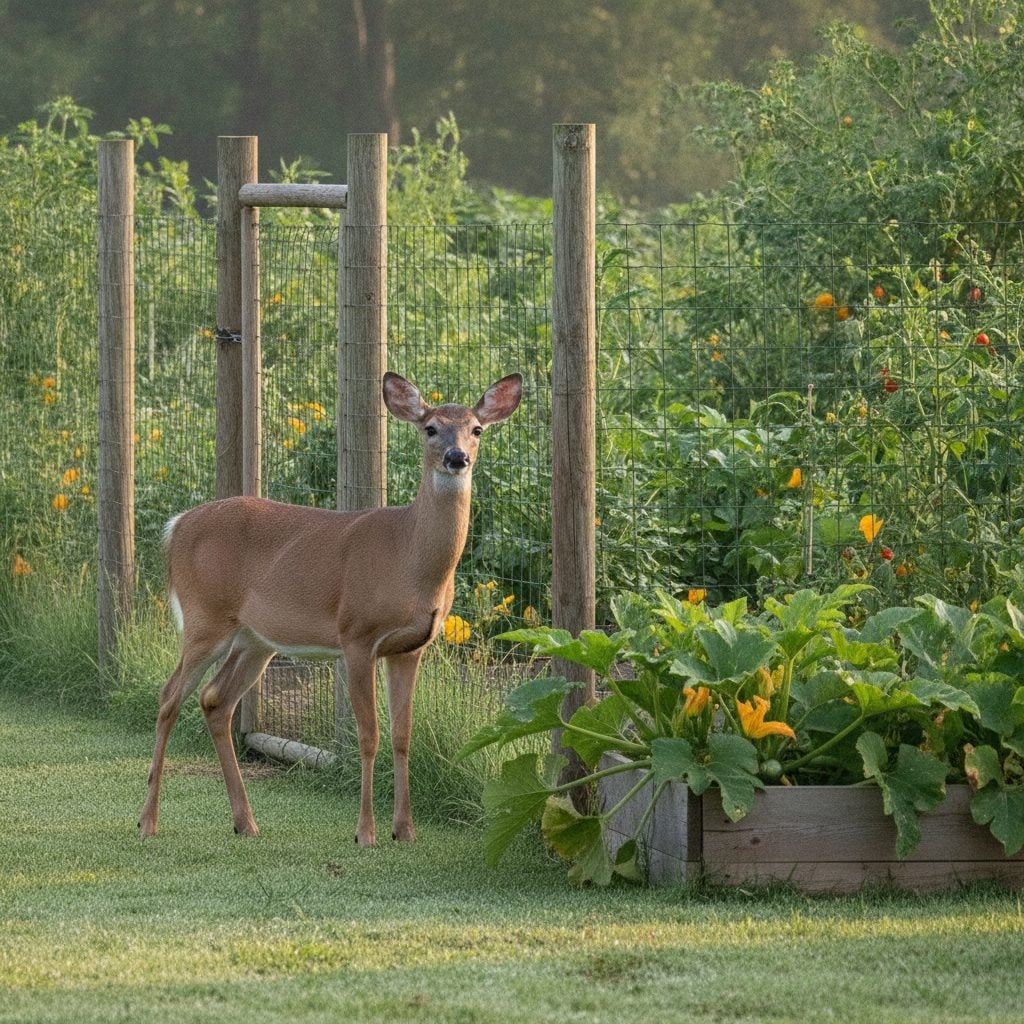
You set out tender lettuce, hostas, and daylilies in spring, and by early summer the tops are gone, clipped clean overnight. If that sounds familiar, white-tailed deer have found your beds and turned them into a salad bar. The surest way to keep deer out of your garden is a tall fence, but fencing is only one tool in the kit. Below you will find the full picture: how these animals live and feed, why they keep coming back, and the mix of fences, repellents, and deer-resistant plants that actually protects your crops through the season.
Wild animals are part of what makes nature so magical, and watching them can be a real pleasure. It is worth trying to coexist with wildlife in relative peace, yet the same animals can cause no end of trouble when they take up residence in our homes or gardens. In this series, our Wildlife Management Specialist, Shawn Weeks, walks us through some common household pests and shares strategies for keeping them in check without dangerous chemicals or poisons.
Here we look at Odocoileus virginianus, better known as the white-tailed deer.
Habitat and History
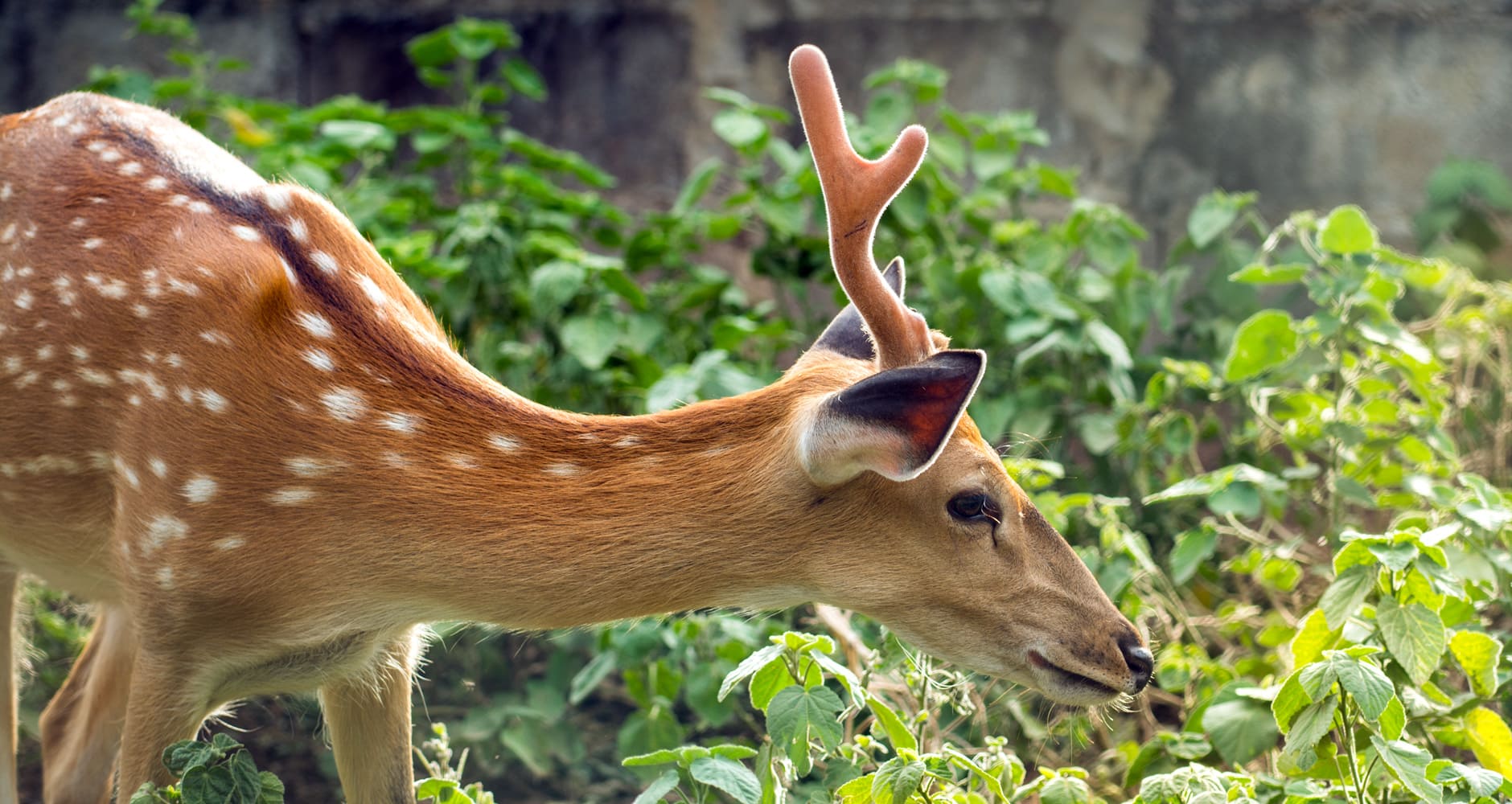
White-tailed deer are found throughout North America. The only US states where they are not widespread are Alaska, Utah, Nevada, and California. Adult males weigh around 150 pounds, with females averaging 110 pounds. They are graceful animals with conspicuous ears, narrow pointed hooves, and long legs. Adult males grow seasonal antlers, which begin to form in spring under a covering of “velvet,” a soft and sensitive tissue. In fall the antlers harden and the deer scrape the velvet off on trees and saplings. They then use their antlers to spar with other males during the rut, or mating season. The antlers are shed in early to mid-winter. Antler size comes down to genetics, age, and diet.
A white-tailed deer’s coat runs reddish-brown to tan in summer, with short, thin hairs. In winter it turns grayish-brown to gray and fills out with thick, long hairs. As the name implies, these deer carry a bright white patch of fur on the underside of their tails. When they are startled, they raise their tails high, like a white flag, as they bound away.
These deer do well in woodland forests with a vegetative understory, and also in fields and meadows left to grow tall. Their favorite habitat, though, is edge, the seam where forest meets field. That preference is a major reason deer thrive in suburban areas, where large yards border small woodlots. If your property sits along that seam, you are prime deer country whether you planned to be or not.
Diet
The diet of white-tailed deer shifts with the seasons. Through spring and summer, deer eat grasses and forbs, which carry protein. In fall they turn their attention to acorns and other mast, the nuts and fruits of forest trees. This mast is full of fat and carbohydrates that deer need to fatten up for the colder months and the rut. During winter they browse twigs and buds from hardwood trees and leaves from conifers such as white pine and hemlock.
Knowing this calendar helps you guess when your garden is most tempting. In late spring and summer, your leafy vegetables and flower buds are exactly the tender, protein-rich forbs deer are looking for. That is the window when a fence or a fresh coat of repellent earns its keep.
Reproduction
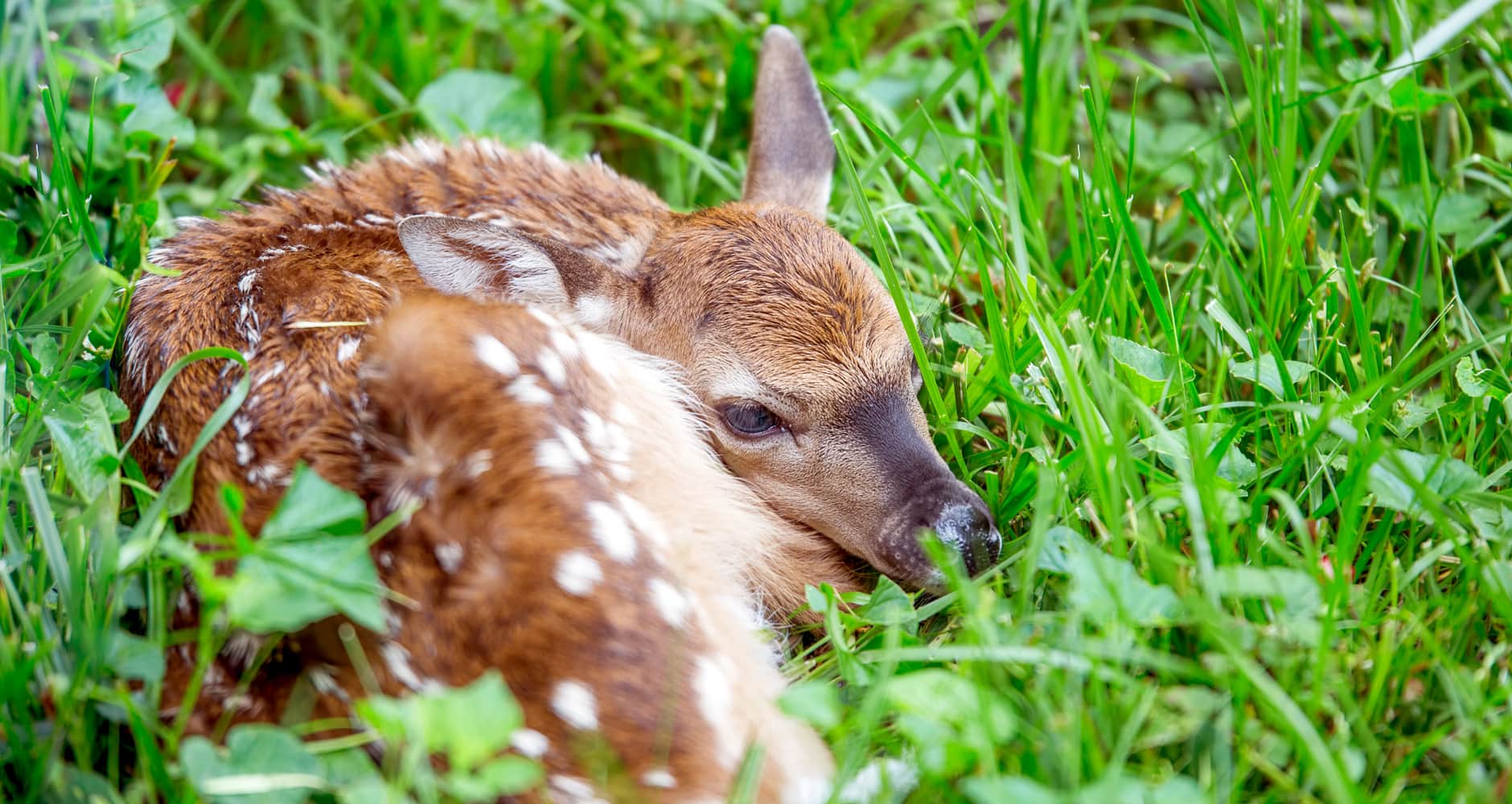
The mating season, or rut, starts at different times depending on where the deer live. In the northern United States, the rut begins around late October and runs through early January. Fawns are usually born in late June. In other regions the rut may come earlier or later with the climate. Newborn fawns generally weigh between four and eight pounds. They depend on their mothers until, and sometimes through, September, when they are weaned. A doe, or female, usually has one to four fawns depending on her age and health. Twins are not an uncommon sight.
All of this matters to a gardener for one reason: a local herd renews itself every year. Solve your deer problem once and a new generation arrives the next summer, which is why the goal is a system you can keep up, not a one-time fix.
Problems, Solutions, and Health Concerns
One method for managing white-tailed deer on your property is hunting, where it is safe and legally allowed. If hunting is not an option for you, whether it goes against your principles or you live where it is prohibited, you can turn to other methods to protect your crops and vegetation. The rest of this guide walks through those methods, from fencing to repellents to the plants deer would rather skip.

Keeping Deer Away From Your Garden
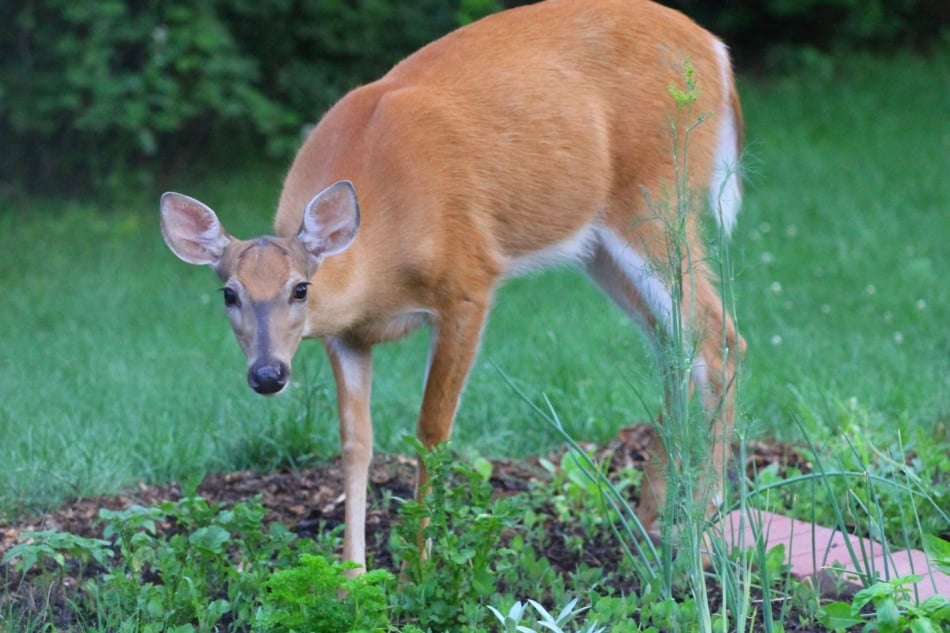
Perhaps the most effective way to keep deer off your property is a deer fence. Deer fences are easy to install, though they can be costly, especially if you own a lot of land. In my wildlife management practice, I have installed literally miles of deer fencing with great success for clients. It usually goes around the perimeter of a property, with gates placed where the owner wants access to certain areas. Deer fencing should stand at least eight feet high to be effective, because white-tailed deer have been known to jump as high as six to seven feet on a full run. Most deer fencing is black polypropylene mesh, which blends into forested landscapes, and it should be inspected regularly for damage.
You could also install electric, high-tensile wire fencing. This type works well for protecting crops from deer browse. Another option is to fence around individual bushes, islands, and any vegetation you want protected. With this method the fence does not need to be tall. Shorter chicken wire is enough for the job, which makes it a budget-friendly way to guard a few prized plants.
There are also numerous commercial repellents on the market, and some work very well. Think of them as a maintenance application, though, because they all need to be reapplied after every rain shower or heavy dew. You can also make your own. Some effective homemade repellents include human hair tied in mesh sacks around the plants you want to protect, bone meal, soap shavings, and liquid hot pepper spray. Try this deer repellent.
A number of other preventive measures help too. Planting away from hedgerows and tree lines can reduce the traffic. Planting ornamentals that deer do not like can also have a positive effect. These include columbine, coneflower, goatsbeard, St. John’s Wort, meadowsweet, sea holly, marjoram, peonies, trillium, foxglove, lavender, verbena, and many others. However, many plants that were once unpalatable to deer, such as boxwood, holly, and rhododendron, are sometimes eaten where the deer population is high. In Connecticut, for instance, an exceptionally large deer herd creates enormous pressure for food. Some parts of the state have been estimated to hold as many as 35 deer per square mile. That is not the norm, but it shows how hunger can override a deer’s usual preferences.

Deer-Resistant Plants to Grow
No plant is truly deer-proof, but plenty are deer-resistant, meaning a well-fed deer will usually walk past them for something tastier. As a rule, deer dislike three things: strong scents, fuzzy or prickly leaves, and bitter or milky sap. That is why the herbs and ornamentals below tend to survive when the tulips do not.
- Aromatic herbs and flowers: lavender, marjoram, and verbena carry oils and scents deer would rather avoid.
- Fuzzy or textured foliage: sea holly, columbine, and goatsbeard give a mouthful deer do not enjoy.
- Bitter or toxic to deer: foxglove, St. John’s Wort, meadowsweet, and peonies are usually left alone.
- Reliable bloomers: coneflower and trillium round out a bed that feeds pollinators but not the local herd.
For the best odds, ring the plants deer love with the plants they avoid, and rotate a few new varieties in each year so a hungry herd never learns to count on your beds. Pairing choices like these is the same thinking behind our companion planting guide, which maps out which plants help their neighbors and which ones to keep apart.
Deer Deterrents at a Glance
Each method has a place, and the right choice depends on your budget, your acreage, and how much pressure your local herd puts on. Here is how the main options compare.
| Method | How It Works | Best For |
|---|---|---|
| Eight-foot perimeter fence | Physically blocks deer that can jump six to seven feet | Whole gardens and large properties |
| Electric high-tensile wire | A mild shock trains deer to keep their distance | Row crops and field edges |
| Chicken wire around beds | Short barriers guard individual bushes and islands | A few prized plants on a budget |
| Commercial or homemade repellents | Scent and taste deter browsing, reapplied after rain | Front-porch shrubs and quick fixes |
| Deer-resistant plants | Strong scents and rough textures send deer elsewhere | Ornamental beds and low-effort borders |
Michigan State University Extension reaches the same conclusion in its guide to deer damage management: fencing is the most reliable defense, while repellents and plant choices work best as part of a layered plan rather than on their own.
Combine Your Methods for the Best Odds
Because deer are wild animals and can be unpredictable, the most beneficial strategy is a combination of methods that keep deer from harming your crops, ornamentals, and understory. Applying repellent to shrubs might be enough along your front porch, while a mesh fence around the corn behind your barn is a necessity. Just remember that, beautiful and stately as they are, deer can be extremely persistent, and they can cause a lot of property damage if they are not managed diligently. Layer your defenses, keep them up, and let the calendar guide the tending. A quick look at the Almanac’s Best Days and Gardening by the Moon can help you plan the season’s work while your fences and repellents do the guarding.

How to Keep Deer Out of Your Garden: Frequently Asked Questions
What is the most effective way to keep deer out of your garden?
A deer fence is the most reliable defense. Build it at least eight feet high, because white-tailed deer can jump six to seven feet on a full run. Black polypropylene mesh blends into a wooded yard, and electric high-tensile wire works well around row crops. For a few prized plants, shorter chicken wire around individual beds is enough.
How high should a deer fence be?
At least eight feet. White-tailed deer have been known to clear six to seven feet on a full run, so anything shorter around an open perimeter invites them to jump it. You only need a tall fence for a full property line. When you are fencing a single bush or island, a short chicken-wire barrier does the job.
Do deer repellents really work?
Yes, both commercial and homemade repellents can work, but treat them as a maintenance application. They need reapplying after every rain shower or heavy dew. Homemade options include human hair tied in mesh sacks, bone meal, soap shavings, and liquid hot pepper spray. Repellents do best as one layer in a larger plan, not the only line of defense.
What plants keep deer away?
Deer tend to avoid plants with strong scents, fuzzy or prickly leaves, or bitter sap. Good choices include columbine, coneflower, goatsbeard, St. John’s Wort, meadowsweet, sea holly, marjoram, peonies, trillium, foxglove, lavender, and verbena. Keep in mind that no plant is truly deer-proof. Where herds are large, even boxwood, holly, and rhododendron get eaten.
Will deer-resistant plants stop deer completely?
Not always. Deer-resistant means less appealing, not inedible. When food is scarce and the local herd is large, deer will eat plants they normally pass by. In parts of Connecticut, where some areas hold as many as 35 deer per square mile, hunger pushes deer onto plants they would usually ignore. Pair resistant plants with fencing or repellents for the best results.
Why do deer keep coming back to my garden every year?
Local herds renew themselves each year. Does usually have one to four fawns born in late June, so a new generation arrives every summer. Deer also favor edge habitat, the seam where forest meets field, which is exactly what most suburban yards provide. That is why a lasting solution is a system you keep up rather than a one-time fix.


Shawn Weeks
Shawn is a lifelong New Englander. He lives in Canton, Conn., with his wife Tami, mother, sister, and her three children. He and his wife have two grown children and two grandchildren. Shawn is an avid hunter, fisherman, and gardener. He is also a writer, a nuisance wildlife professional, small scale farmer, and scout leader. You can email him at info@weeksoutdoors.com.
- Shawn Weeks

- Shawn Weeks
- Shawn Weeks
- Shawn Weeks





I painted my aunts wood siding with a liquid dish soap. It was not a whole house though. You might have to dilute it and spray it on. Worked great.
I use scent flags. I tear up an old t-shirt and tie them to 4 foot tall stakes strategically placed along the border of my garden. I have them placed about every 20 feet or so. On the flags I typically use something that has a very strong smell such as axe body spray. This does a pretty good job of keeping the deer away as long as I keep it applied regularly. I will also put something similar to axe body wash in my insect control spray to help out too.
Does anyone have ANYTHING effective to offer on how to keep woodpeckers away from a cedar-sided home? They already have 2 holes the size of a coffee can lid on one end of my home, and cedar is very expensive right now, so replacing the boards at this time is not a solution. In my area the woodpeckers are a protected species so I cannot take my BB gun and end this nightmare. I’ve tried to lure them away from the house by placing a large birdfeeder full of shelled peanuts close by the house, and then moving it farther away every week or so (by just a couple of feet at a time) which is information I received from the City. But it hasn’t worked very well because all the other birds are gathering at the feeder and eating up the food, along with 2 of those cake things made of waxy stuff and bird feed. So, as usual, the City was no help at all. Aren’t they supposed to be the “city planners” who actually help people with problems like this?
The reason I have this problem is my neighbors. I have nicely asked them several times to please remove one of their 25 bird feeders and every time I say something to them about it, they just put up more feeders. I’m dead serious this is what they do. Sooooo, the birds eat in their yard, poop in my yard and all over my lawn furniture and outdoor grill, etc., and it lures them to the area. I do not have a bird feeder, since the last idea with the peanuts didn’t work. That was an expensive little trial and error – about $90 all told.
Does anyone have any ideas for me? I’d appreciate anything you’ve got!
Go to this site and read the suggestions. I like the big owl idea; can buy them at some garden centers, or do a search on Internet. https://www.forestwildlife.org/how-to-stop-woodpeckers-from-pecking-your-house/
Spray them with a hose or sprinkler
Actually this is a pretty good idea. They make motion activated sprinklers to help keep deer out of the garden. This may be an excellent way to keep the buggers away. The other thing I might say is an airsoft gun. It should run them off without actually harming them
My solution? A dog. She chases them away from the garden, we live on ten acres in the country and it is very effective. We love deer, but we love our garden. Our dog doesn’t hurt the deer because the deer would kick her butt, but she is a very effective deterrent.
Dog hair, and human hair… they don’t like either. I tend to brush my dog next to my garden.
I use 2 raw eggs beaten and added to 1 gal of hot water sprinkled around my garden or shrubs. They will not come near them. Won’t keep raccoons or possums out. They will come much more because they like rotten food. But no deer or rabbits.
I ment but goodness courtney but thanx for the help on the deer problem !
umm buzzsaw an 8 foot fence don’t mean anything honey I’ve tried it ok it don’t help that much believe me !
I can’t keep racoons out of my corn feild I mean they are cute an all be goodness
Plant running beans in your corn rows after the corn is about 18″ high. Racoons don’t like getting tangled up in the vines. I read this a long time ago in Mother Earth news. Never had any in my corn.
I have tried everything to keep deer out of my garden i live in defuniak springs florida the secret to keeping deer out of my garden is called REMINGTON 870 works well,
lol … Lived there briefly in the late 90’s … right off hwy 90 … My husband is good friends with the Sandlers … Do they still have that old wood shack post office … that was so cool … Debra MM
We live in the High Plains Desert of rural Central Nevada for many years and until recently did not have problems with deer. Having a neighbor across the street feeding the deer did not help. Once they arrived, we discovered that they were jumping the perimeter fence and demolishing our drawf tree orchard and grape vines. We tried several methods to “repel” deer.
We began with our 90′ x 90′ food garden, using light duty garden posts to extend the existing T-posts and wrapping fiber and nylon ropes around the garden perimeter. This method was successful in keeping the deer out, but the rope sagged from rain and wind, and started to decay from the sun.
Many factors were learned and taken into consideration such as some of the repellents just do not work, the cost of reapplying on a constant basis, the damage some of the repellents did to the trees and grapevines, the winds, the rain and sun decay of the rope, and county ordinances, we came to the decision to extend the perimeter fence T-posts with light duty garden posts every ten feet and snuggly (not tight) wrapping electrical fencing tape around the posts. The extension is about 2′ above the existing fence. The garden posts have tabs that can be closed on the tape, which is fiber and metal. The tape was given one twist before the it was carefully tapped into the tabs, so when the wind blew, it would twist the tape. The tape, also, gives off a sound when it twists. There is a limited amount of color but we went with the white tape.
We decided on the electrical fence tape because of its length in one continuous roll and the strength of it by having the metal in the tape. So far, it is working out very well. At first, the deer had problems jumping out of our yard and stopped dead in their tracks at the fence. Once in a while, we would see deer track along the outside of the perimeter fence, but no indications of jumping the fence. Now, we find no tracking at all. Once our perimeter trees have caught up and grow to the height of the tape, the posts and tape will be removed.