

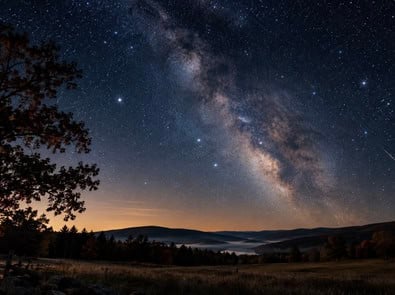
Does the night sky suddenly look brighter? September’s earlier darkness, changing weather, Moon phase, and improving atmospheric transparency can reveal stars that were hiding in plain sight all summer.
Read MoreFarmers’ Almanac astronomy provides the best times to view meteor showers, full moons, facts about planets and stars, plus more!
Does the night sky suddenly look brighter? September’s earlier darkness, changing weather, Moon phase, and improving atmospheric transparency can reveal stars that were hiding in plain sight all summer.
Read More
The famous August Perseids may be over, but Perseus isn’t quite finished producing shooting stars. A little-known meteor shower arrives...
Read More
The Perseids may get most of the attention in August, but they aren’t the only meteors streaking across the late-summer...
Read More
August 2026 brings one of the year’s finest months for stargazing, with dark skies for the Perseid meteor shower, a...
Read More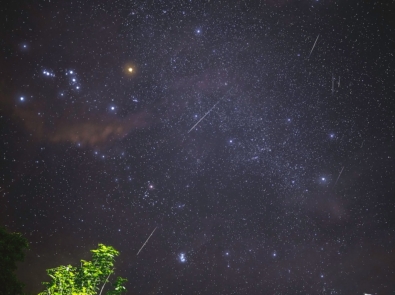
If you've been looking for an excuse to spend a warm summer evening outdoors, this week offers one of the...
Read More
The Buck Moon is July's full moon, peaking on Wednesday, July 29, 2026 at 10:36 a.m. ET. The name and...
Read More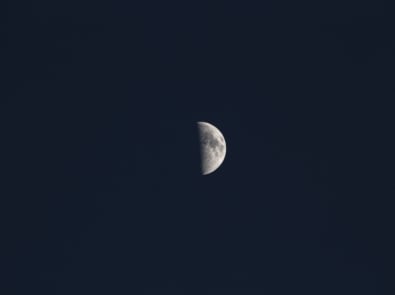
The Moon reaches its First Quarter phase on Tuesday, July 21, 2026. If you've looked up after sunset over the...
Read More
For thousands of years, the Moon has been humanity's calendar, compass, and constant companion. Farmers planted by its phases. Sailors...
Read More
Have you ever looked up at the first bright star of the evening and quietly made a wish? You're certainly...
Read More
For more than a century, Americans have adjusted their clocks twice each year—"springing forward" in March and "falling back" in...
Read More